

With federal governments all across the globe becoming more strict on emissions regulations year- after-year in order to reduce greenhouse gases, a lot of car manufacturers have answered the call to develop and sell electric offerings. Over the course of a decade, we have seen some car manufacturers get it right, and others getting the concept entirely wrong. Well, it is now Porsche’s turn to present the world with its version of an electric vehicle, and they have not disappointed at all.
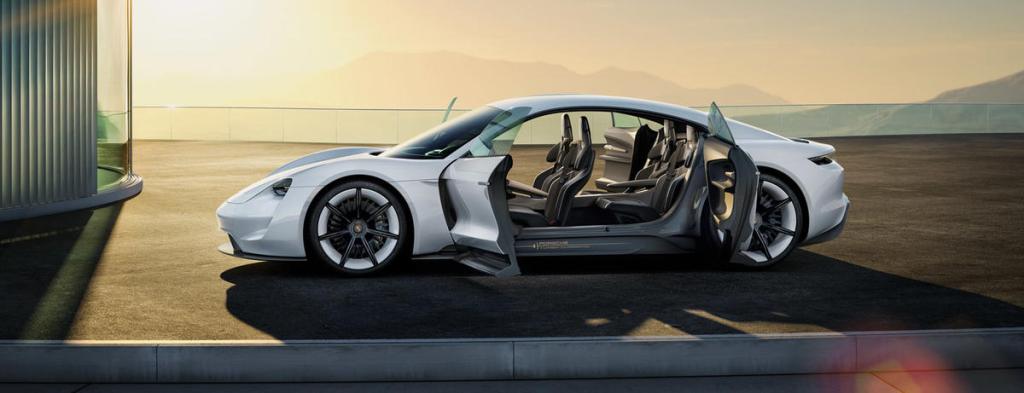
Porsche first gave us a glimpse at what their ideal electric car would look like at the 2015 Frankfurt Motor Show, when it presented the Mission-E Concept Study. From that point onward, enthusiasts and electric car buyers eagerly waited the arrival of the production version of this very promising vehicle. And now, after 4 years of hard work and development, Porsche has presented us with its final production version, now called the Taycan.
What Is It?
Formally introduced last September, this first electric offering from Porsche promises to take on the best of the best in the electric car food-chain. With the Turbo S model putting out an impressive 751hp allowing it to do a 0-100km/h run in 2.8 seconds, it has established itself as one of the fastest electric cars on the market today, in addition to bringing new innovations into the world of electric vehicles. Rather than equipping the car with a single speed transmission like most manufacturers, Porsche opted to develop a two-speed transmission for the Taycan. This allows for optimum acceleration in first gear, followed by improved efficiency and overall performance in second. Now, because this is an electric vehicle, then it must have regeneration capabilities. It does, of course, but in a different way than most vehicles. Rather than regenerating energy through coasting, the Taycan instead is slowed slightly by the electric motors such that it will still remain in uninterrupted motion during driving. It is possible to have the car coast freely on its own, though it will not regenerate energy. This brings up a key point about the car: it does not allow for one-pedal driving. The car will still recuperate electricity during braking. With its newly seen features, it is evident that Porsche were thinking outside the box when developing this car.
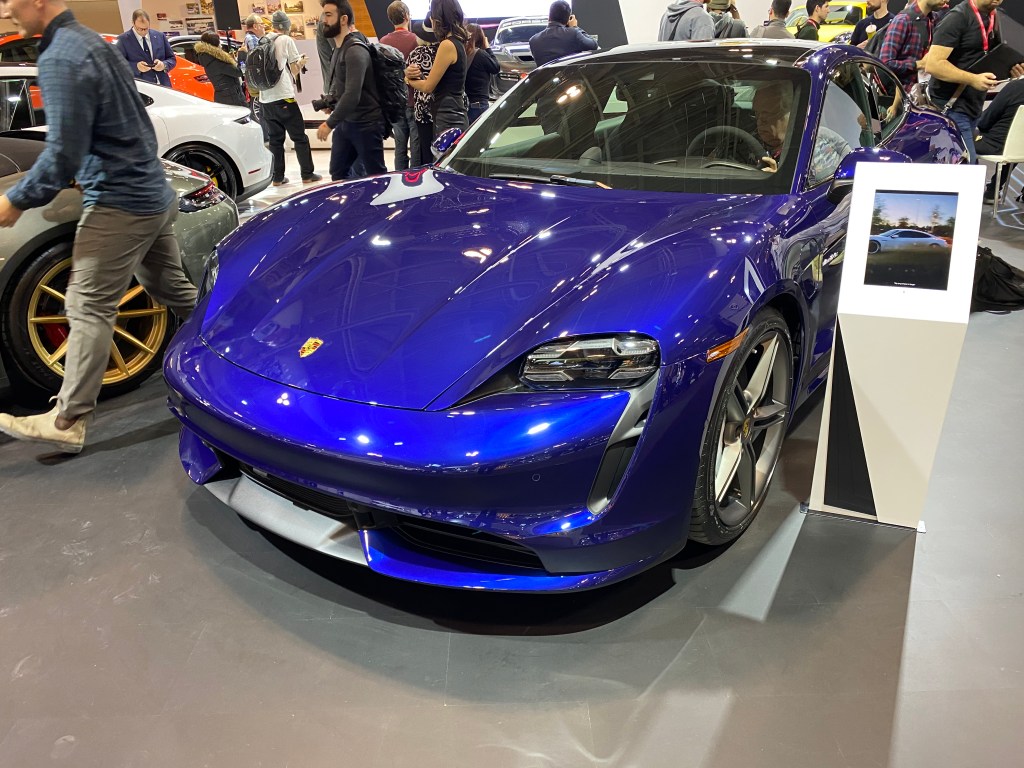
This was one of the cars that Porsche brought to this year’s Canadian International Autoshow, and I was able to check it out during the show’s media day. To be exact, 2 examples were shown: a Gentian Blue Turbo and a Carrara White Turbo S. Given the positive reception from the press and journalists on its interior, exterior, and the way it drives, I was looking forward to seeing what all the buzz was about. This is Porsche’s first electric car after all. As I previously mentioned in my 718 post, this is only a discussion on the car from a cosmetic and to a certain extent, a technical point of view.
The Exterior


Upon first staring at the car’s exterior, it took me by surprise that it is actually a tad bigger in size than in pictures, and also wider. Being someone who has always been into the widebody Porsches, I like this. Analyzing its overall design, I would say that it is primarily composed of the lines of the Panamera with a small amount of influence from the 911. Up-front, there is an all-new headlight design, which stirs away from the ones seen across Porsche’s current model range, which you can say are all very similar to each other. While the reception on these headlights has been mixed, I must say that I like them, as it gives the car at look of its own. It is also likely that Porsche did not want this car to look like a Panamera, which is its other sedan offering, hence the different headlight design. The front bumper, like other models, is curved. If there is one feature that I like about this bumper design, it is that it lacks any grills, yet, it makes the car look like any other car on the road. In other words, the Taycan doesn’t show off the fact that its an electric car, unlike most electric vehicles available today. As for the frunk(front trunk), space is very limited, thanks to the electric motors at the front, so an owner would have very few options as to what it is possible to fit there.
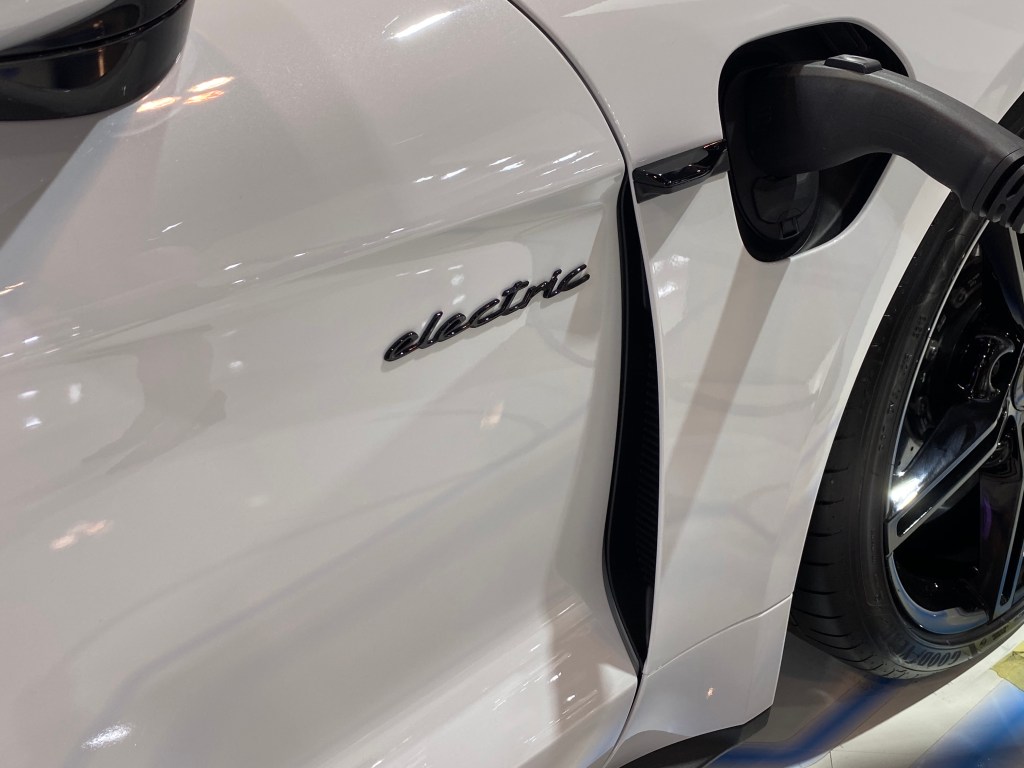
Walking towards the car’s midsection, the Panamera resemblance is evident, though the roof lines appear more round compared to a Panamera, being more 911-ish. Since these cars are very powerful, they are equipped with massive 16.5″ brakes in order to help with stopping at high speeds, which drivers will likely want to experience. On the Turbo S, the PCCBs come standard, while the other models come standard with either the regular steel brakes or the PSCBs(Porsche Surface Coated Brakes) depending on the model, though the ceramics will still be available as an option. The two cars at the show both had the 21″ Mission-E Design wheels, and is one of the best wheels available for the car. I had the chance to see them painted in both Black and Satin Platinum, and I would say that the wheel colour for me would be dependent on the car’s exterior. Other options are seen around this section of the car, such as the “electric” badges, should an owner want to give away the fact that they are driving an electric car, and the automatically-opening charging ports. All models will have two charging ports, one on each side, and as standard they open manually. I personally would not choose for this option, as I feel that it serves no real advantage over a manually opening charging-port, as all I’d want to do at the end of the day is charge the car.

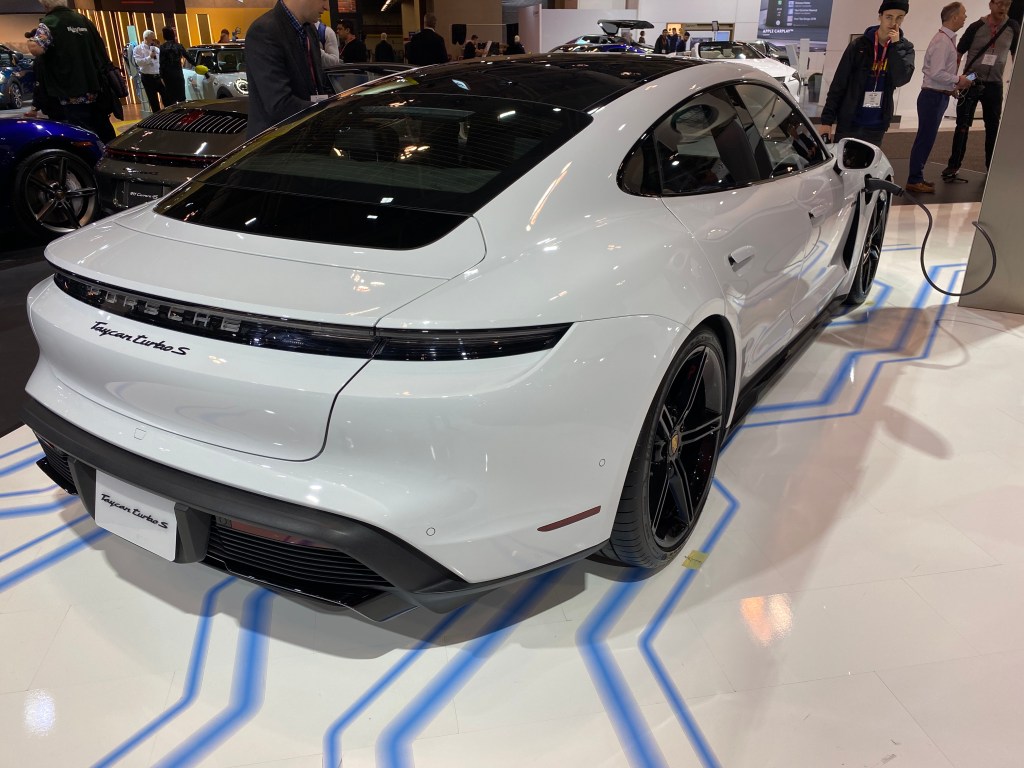
At the rear, there is quite a lot going on. Firstly, the overall bumper design which is more squared compared to the rear of most models. The back of the car is also longer in length compared to a Panamera. The rear-lights are all housed in the signature Porsche strip, seen in the likes of cars such as the 911 and Cayenne. An interesting detail here, which is the “digital grid” pattern seen as a background to the “PORSCHE” lettering. Though not deployed while off, the Taycan does have an automatically deploying rear wing that serves the purpose of reducing the drag coefficient, improving the downforce generated, and managing airflow. Opening the trunk, it was done via the push of a button located just under the trunk itself, but separate from it, which is quite unusual. Though the rear trunk offer a lot more space than the frunk, it is still not as spacious as those as Porsche’s family cars, but it is still possible to go shopping or do the grocery run in this car. At the bottom end, a wide rear diffuser is present, which just like the rear spoiler, helps significantly with air flow.
The Interior
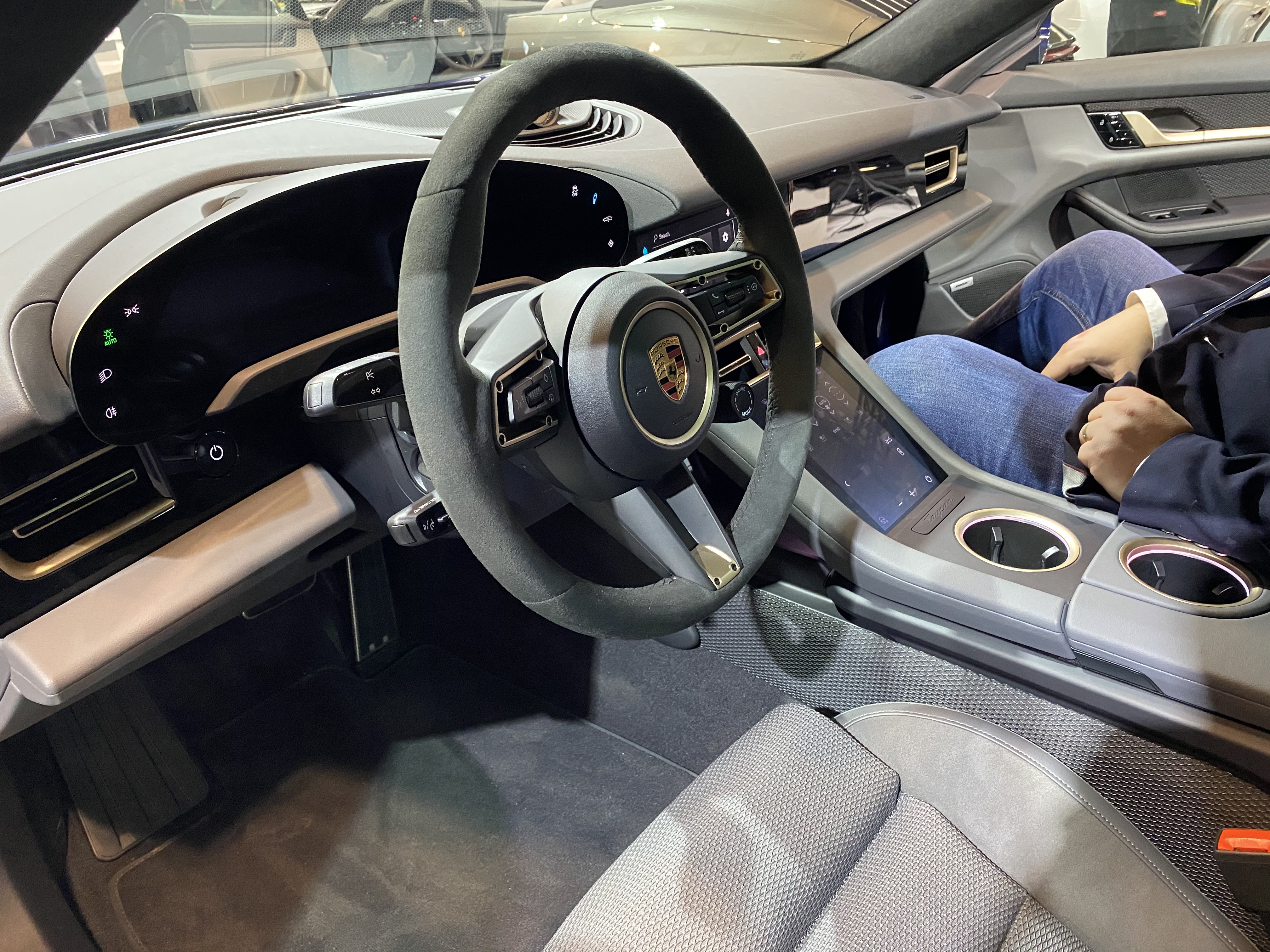
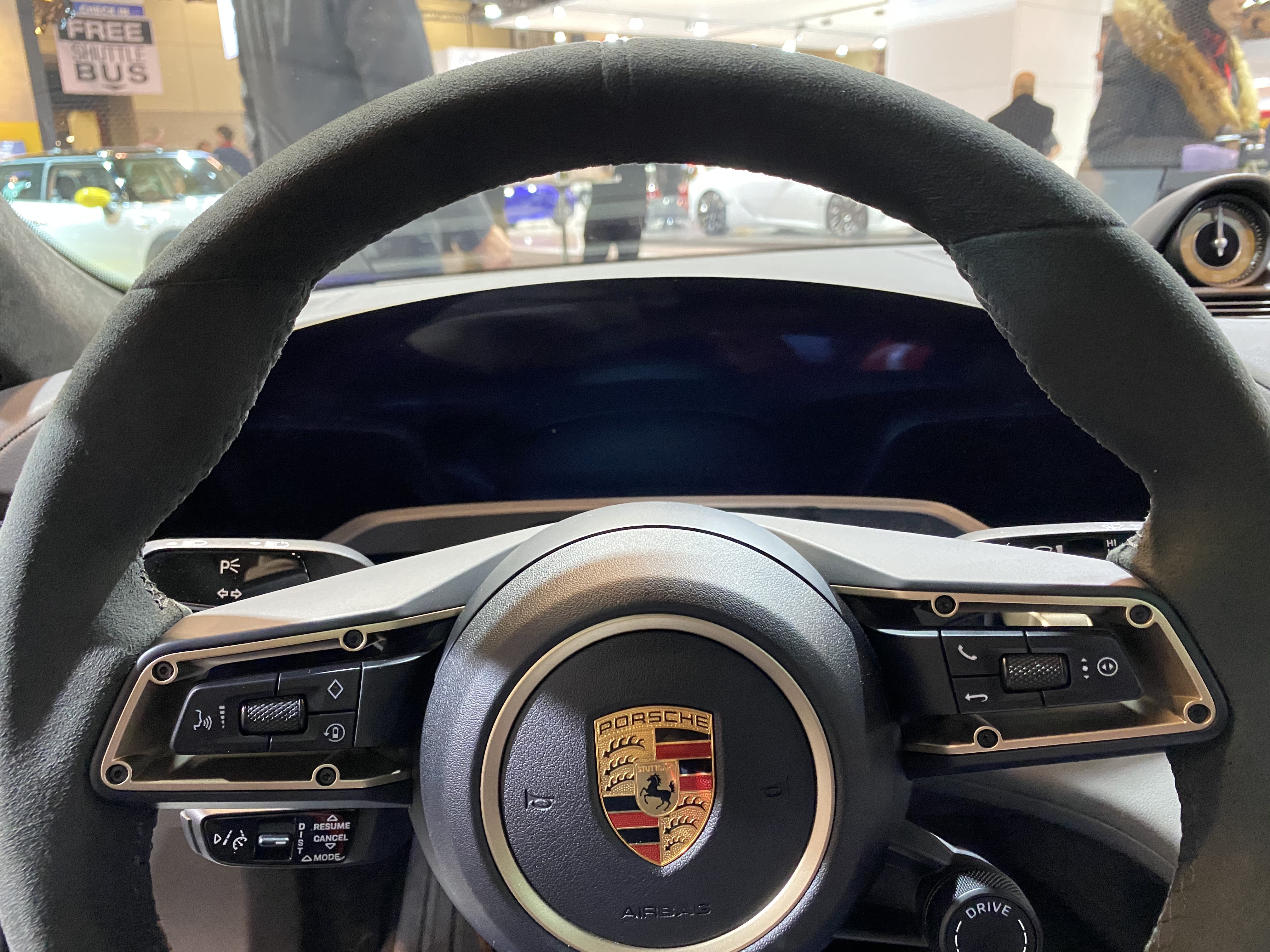
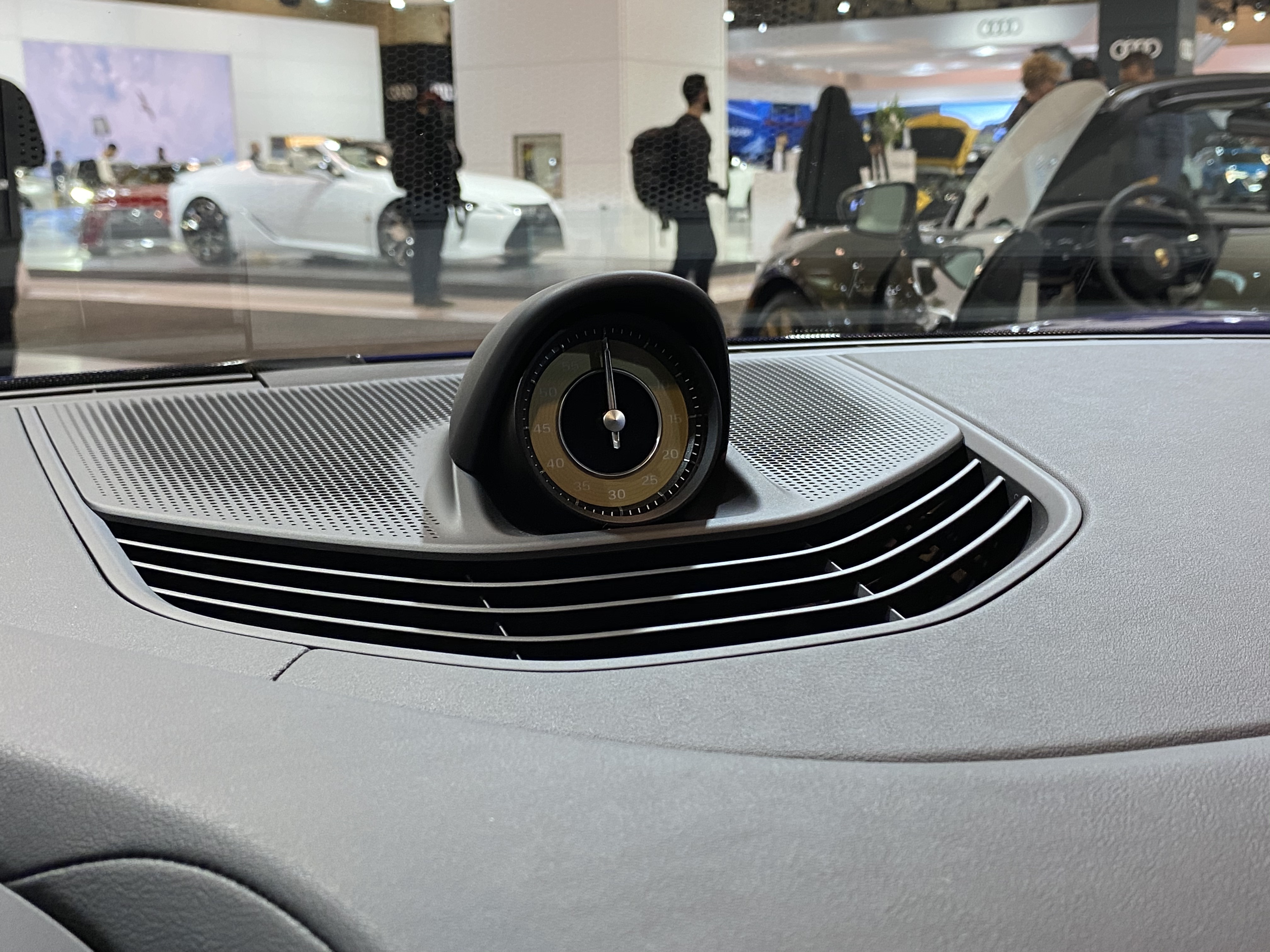
Pulling the familiar-looking driver’s side door handle(seen in the 992), and climbing in, the driving position felt very sportscar like. I would best describe it as being only slightly higher than the 911’s driving position. The steering wheel is the same that is seen on the current 992, and is equipped with the multifunction controls and the mode selector seen on that model. Interestingly, the wheel does not have paddle-shifters like PDK-equipped cars. It surprised me because of the fact that the car has a 2-speed transmission. That aside, you also have your various steering column stocks to control the many everyday driving functions. Also to note that some of the dash space is used to house the “buttons” to control the driver-oriented features like the traction control, front lift, and suspension mode. An interesting quirk noticed is how the car is turned on via a button, still located to the left of the steering-wheel, rather than a key, reminding one that the car they are in is not powered by an internal-combustion engine.
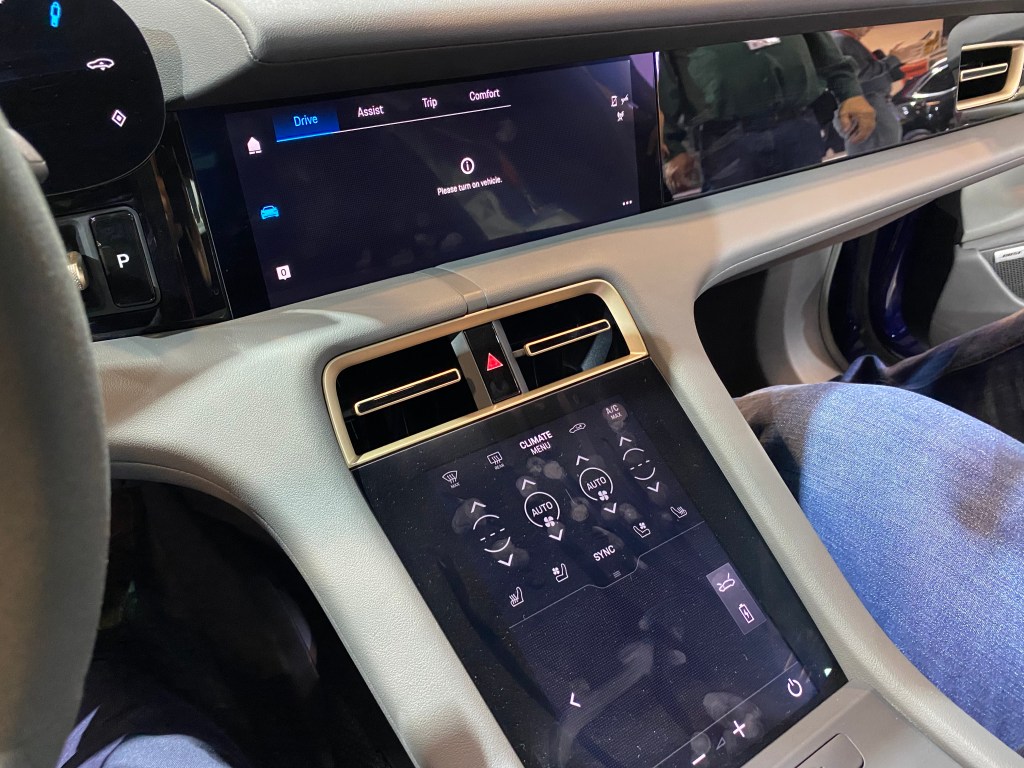
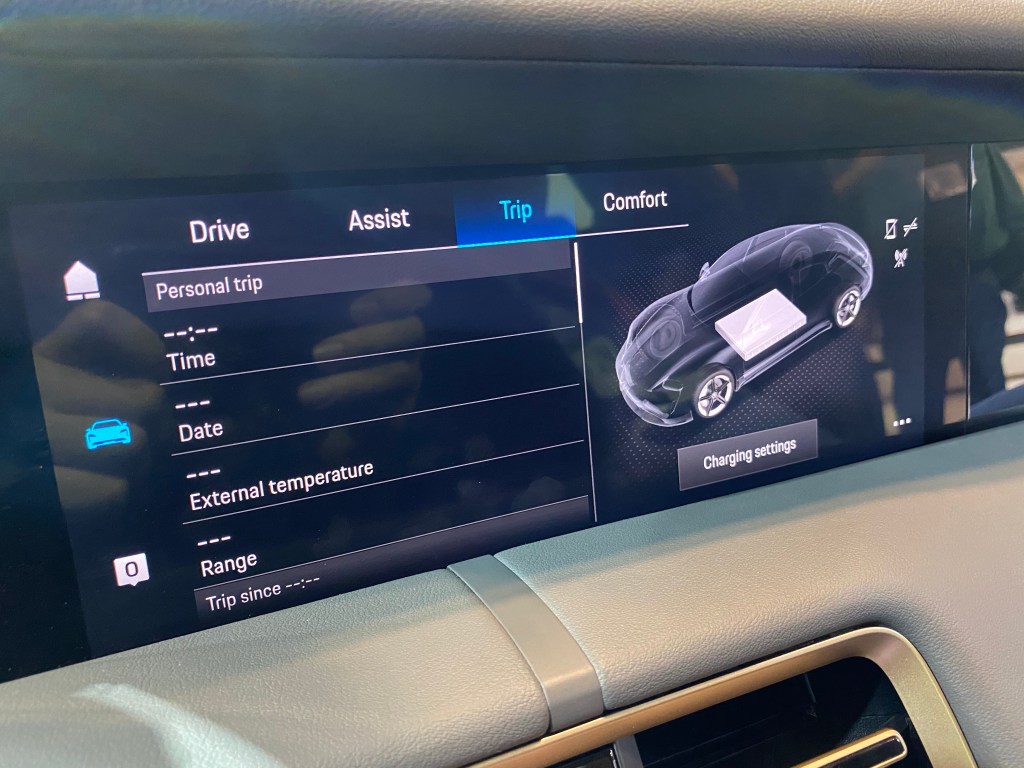
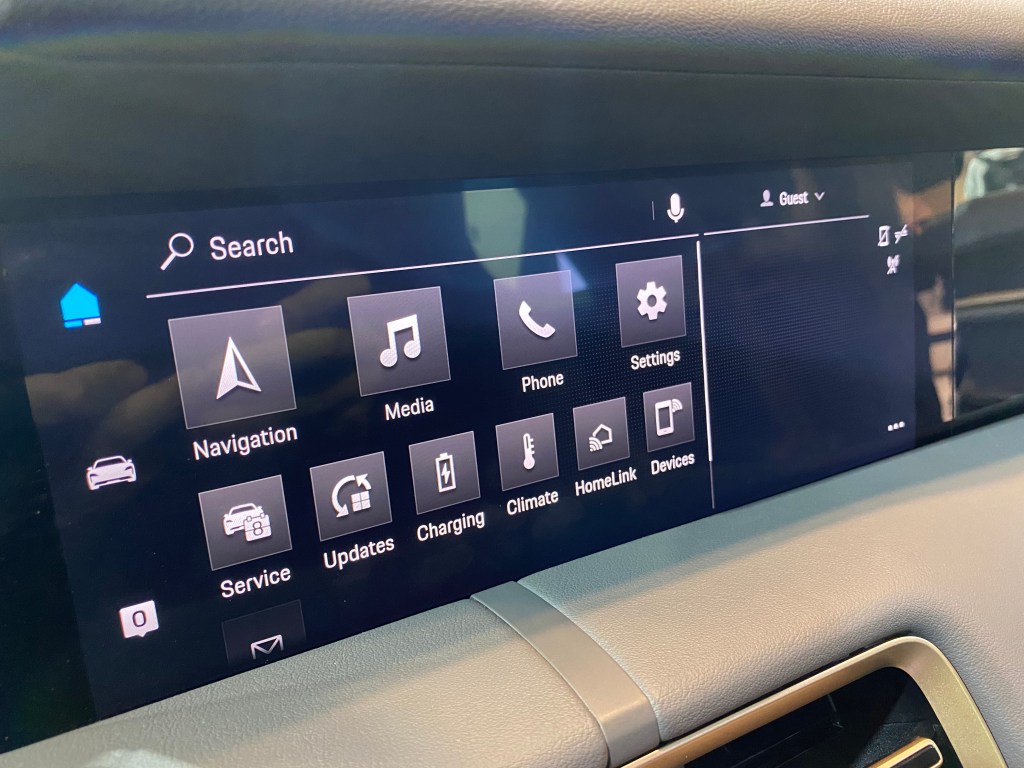
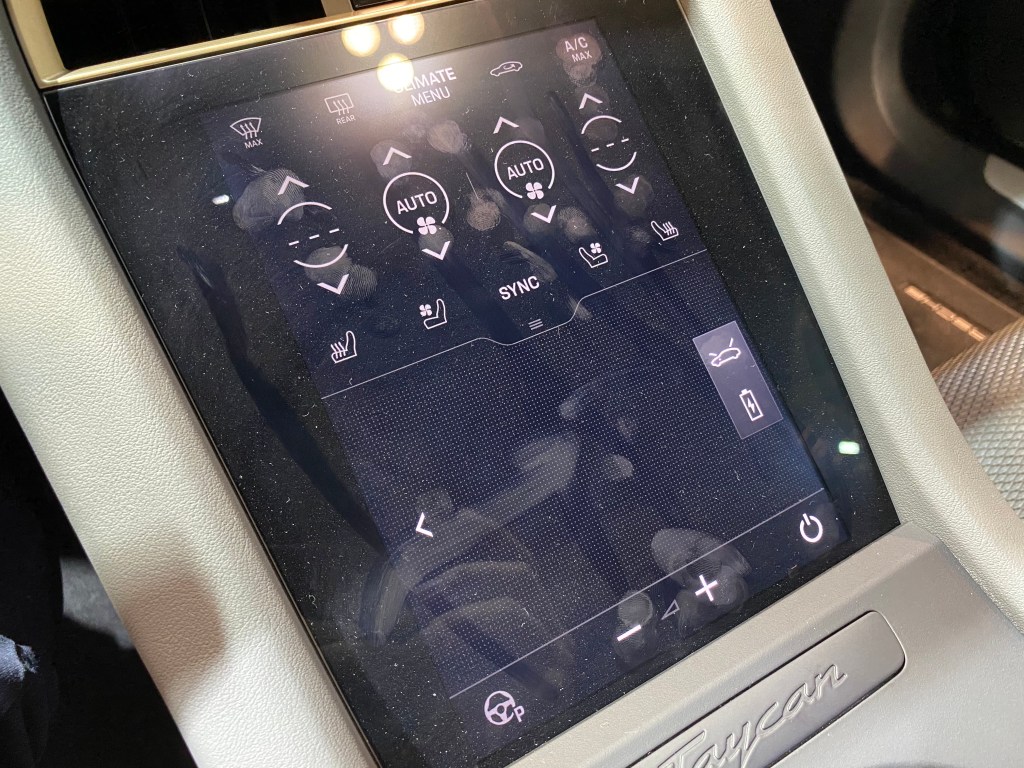
One of the features of this interior is how minimal it is when it comes to the appearance of physical buttons; there are next to none. Everything is controlled from the various touchscreens. Primarily, there is the main infotainment system which displays the car’s statistics such as driving distance, the navigation system, the radio source, comfort features, among others. The climate controls are operated via an elevated display in between the driver and passenger. Here, you will find the typical climate control adjustments such as fan speed, defroster activation, and temperature. It is also here where you will find some of the comfort features such as seat heating controls. This display differs from the main one in that it has haptic feedback when used, a neat feature that can assure occupants that they are indeed modifying the climate conditions of the interior. Also to note that if the car is plugged in, then the battery’s charge level will be displayed, also another neat feature.
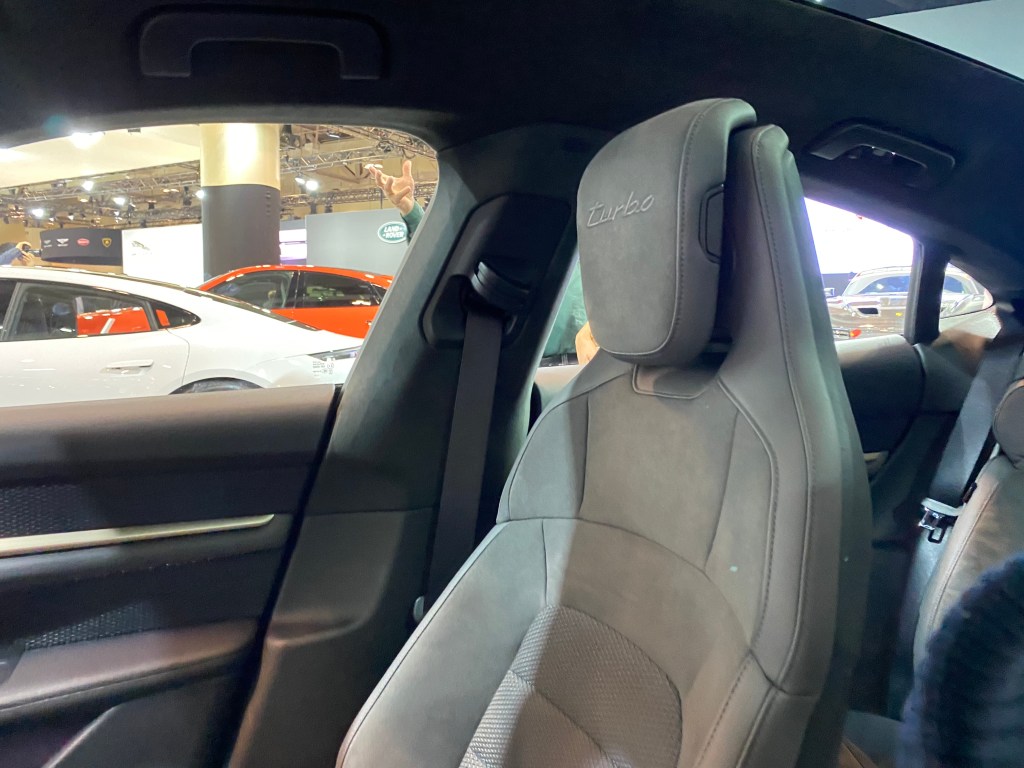
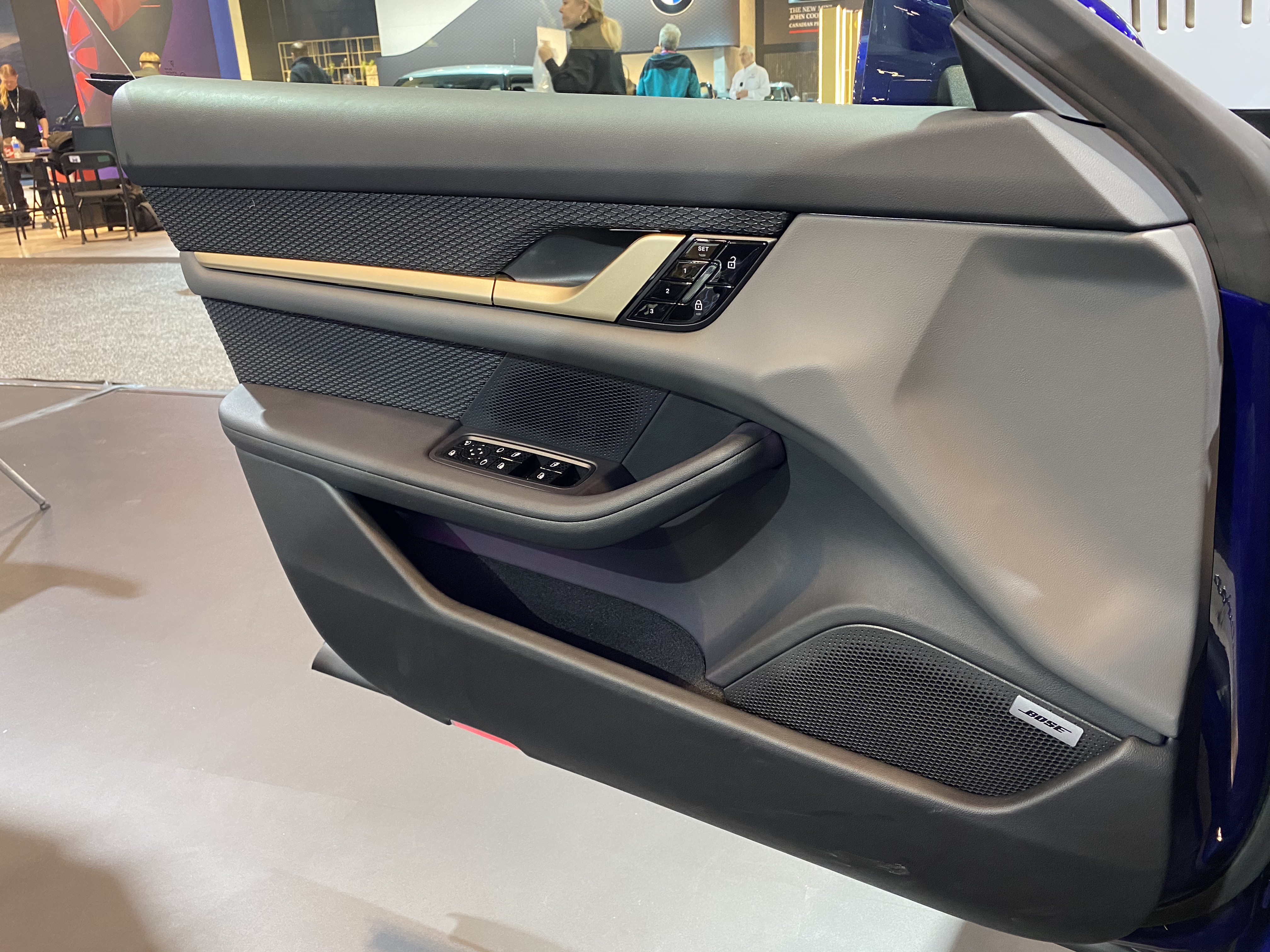
The two Taycans each had a different interior: the Turbo had the new leather-free interior(race-tex) in Black/Slate Grey, while the Turbo S had the leather interior in Black. I was very interested in seeing the race-tex interior, made as a result of promoting the “eco-friendliness” of this car. They also both had the 14-way Power Seats. In the race-tex interior, these are a lot of components which are covered with alcantara, including the steering wheel, and parts of the door cards. As for the race-tex material itself, it is seen in the seat centres and among other parts of the interior, and it is no ordinary cloth seat material. Other parts, like the seat borders, are covered in a leatherette material. Overall, is is an interior of exceptional quality. The 14-way seats I find best suit the lines of the interior more so than the 18-way seats, which have a slightly bulkier appearance to them in comparison to the slimmer, more linear appearance of the 14-ways. Sitting in the 14-ways, they held me in very well, and it is possible to adjust how tightly they hug you. This is good, specially if you decide to partake in fun activities in the car such as an autocross or a track day, as you are assured that you won’t be bouncing around turning turns.
Consclusion

Porsche’s first electric car has taken the world by storm. With its eyes set on a big share of the premium electric vehicle market, it is without surprise that they pushed themselves to make a car that offers both great quality and driving performance. Not only does it have the looks, the comfort, and the power, it also has one of the best ranges for a battery, which is being rated at well over 400km if used wisely. While initial testers have been impressed by the car, we won’t know about its real-world performance until customers begin to take delivery. After having seen the car for the first time, I must conclude that Porsche nailed it by not only taking action to changing emissions regulations, but by also creating a car that still feels like their sports car offering, as evident by the cars feeling while sitting in the driver’s seat. With the Canadian market launch coming next month, I have been fortunate enough to have been invited to the car’s launch party, which I will eventually discuss, so stay tuned for that. With this post also comes to an end my coverage of CIAS 2020, as I have now covered the newly-seen cars that were present.
If you are interesting in knowing more information and potentially attending the Canadian International Autoshow, running from February 14th to the 23rd, you can follow this link.
Best Regards,
Juan Reyes-Abreu
 PorschePassion.net