
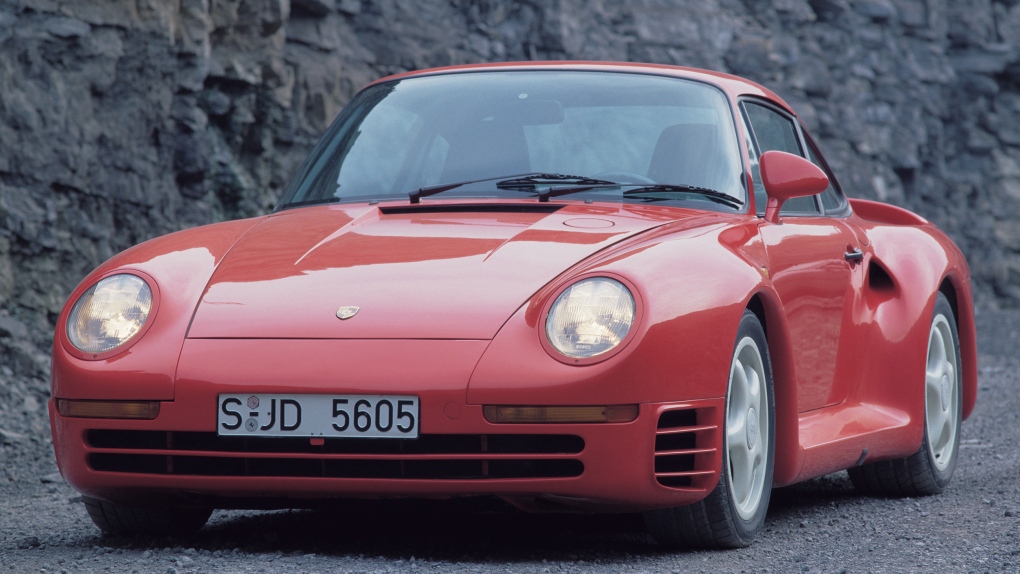
The late 70s and early 80s was a period of uncertainty for Porsche. With the company claiming the 928 as its flagship model at the time, the future was looking bleak for the 911, and it was certain that it was to be discontinued. That was until a gentleman by the name of Peter Schutz was appointed CEO, and decided that the rear-engined model should continue to be sold. This gave the engineers at Porsche the opportunity to research ideas so as to how the 911 could be further developed. To do this, the head of engineering at the time, Helmut Bott, decided that the best method of research would be via racing, an idea to which executives agreed with. And so with that, the 959 project was born.
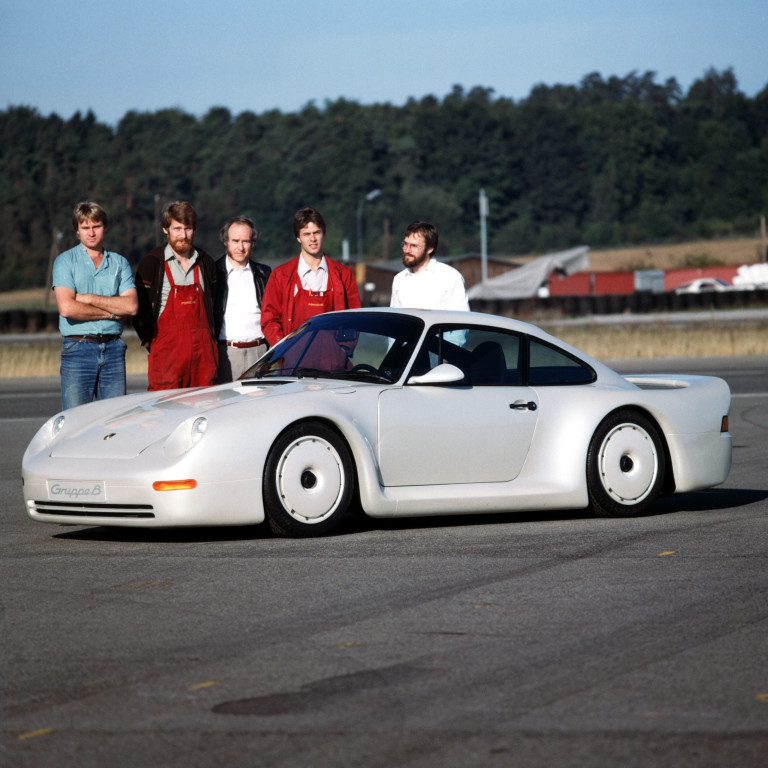
Unbeknownst to many, the 959 was developed initially as a race car, more specifically Group B rallying. This FIA-regulated rally series is known by motoring enthusiasts and the like for producing some of the most powerful and driver-demanding cars ever seen. Ask anybody that knows their rally cars and undoubtedly they will direct you to the Group B-era if you ask them what they think is the best WRC-period. In order for cars to be homologated for Group B, a manufacturer was required to produce at least 200 road-going examples of the car. Unfortunately for Porsche, they were unable to enter the 959 in these rallies, as the road cars would not be ready until 1987, by which then the series had been shut down by the FIA due to a number of fatal accidents involving both drivers and spectators.

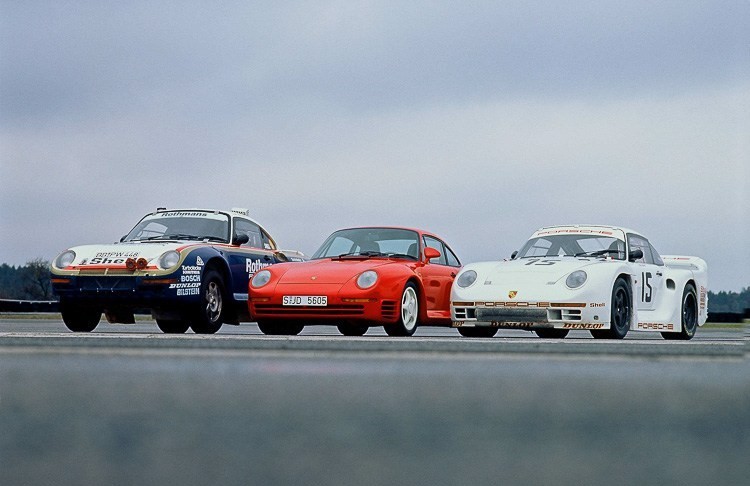
That didn’t prevent Porsche from entering the 959 in other racing competitions, most notably the Paris to Dakar Rally. The development mule, known as the 953, was a 911 Carrera modified for rallying and was used to test the all-wheel drive system that was to be on the 959. This car was entered in the 1984 rally and it won under the hands of René Metge. The following year saw the debut of the 959 in the rally, though still in an unfinished state, as it retained the 953’s engine. Porsche’s fortunes were overturned this time around, as all cars failed to finish. It was in the 1986 rally that the “real” 959 made its debut in all its glory, with all components finalized. Not only did the car declare itself the winner of the rally yet again under the hands of René Metge, but Jacky Ickx followed in second place to make it a 1-2 finish for Porsche.
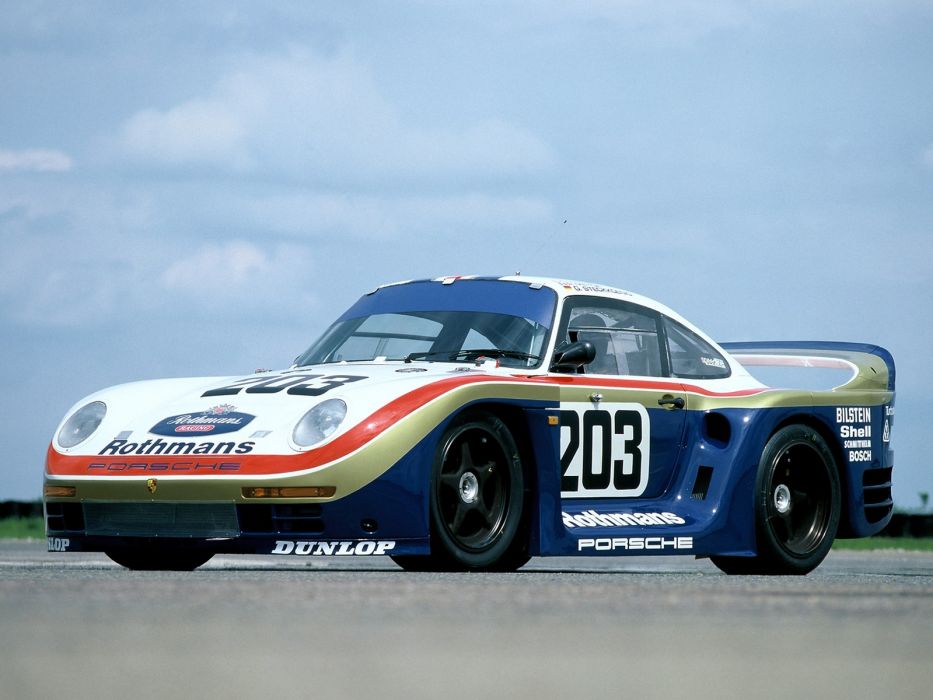
Porsche modified the 959 to participate in endurance racing as well. Dubbed the 961, it competed in the 1986 and 87 World Sportscar Championships. Unlike the rally car, the 961 saw very little, but valuable success, with its only victory being the 1986 24 Hours of LeMans with French drivers René Metge and Claude Ballot-Léna at the wheel.
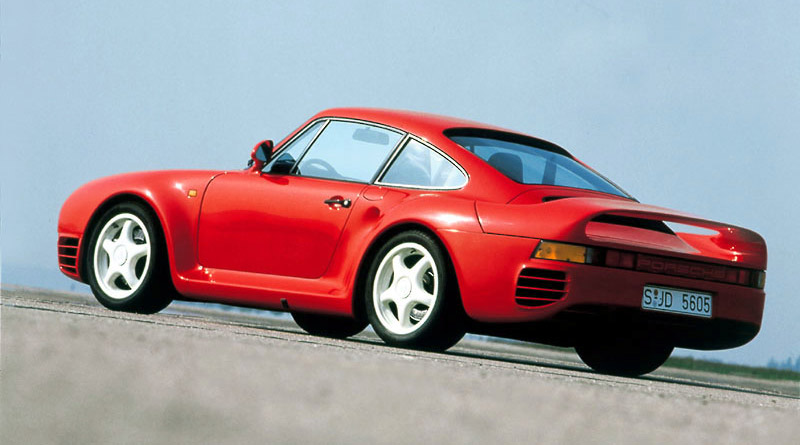
The road version of the 959 made its debut at the 1985 Frankfurt Motor Show, though deliveries would not start until 1987. Power came from a 2.8L flat-6 with 4 valves per cylinder, which had an output of 450hp. Back in the mid-80s, not only was the power figure amazing, but so was the technology behind the engine. All 6 cylinders were cooled by air while the heads were water-cooled. The biggest innovation in this engine was the sequential twin-turbochargers, a first for Porsche. This new setup, which was meant to allow the engine to deliver power smoothly, regulated the use of the two turbochargers, so only one turbo would operate at lower RPM ranges while both turbos are in operation at the higher ranges.

Power was sent to the 4 wheels via a unique manual transmission with 6 forward gears and a reverse gear. The unique aspect was that of the Gelände gear(seen as G on the car’s gear lever), which is a gear meant for offroading. Porsche made this gear with the purpose of providing traction in surfaces where very slow driving is required.

The innovating did not stop there for the 959. In a time where you would get in a car and drive it as it was, Porsche’s supercar allowed you to adjust various settings to enhance the driving experience. Its all-wheel drive system, called PSK(Porsche-Steuer Kupplung) could distribute the engine’s torque between the front and rear axles depending on the driving conditions, with up to 80% of torque available to the rear wheels. A dial in the dashboard showed the driver how much torque was being distributed between the two axles, and also allowed the selection of 4 distribution settings: dry, wet, snow, and 50/50 distribution. Perhaps the most impressive feature of the 959 is the ability to adjust the suspension stiffness and ride height, done at the turn of two dials behind the gear lever. Given the car’s rally nature, it made sense for Porsche to make these elements of the car adjustable for customers that would wish to take the car for an off-road spin.

Weight savings was a key component during development, and so, Porsche sought out new materials for the body and chassis of its very advanced automobile. Per road regulations, the front hood and doors were constructed from aluminum for safety reasons, however, the remaining body panels were made from Kevlar, a synthetic fiber both strong and fireproof, which classifies as an aramid alongside Nomex, which was used to construct the car’s floor.

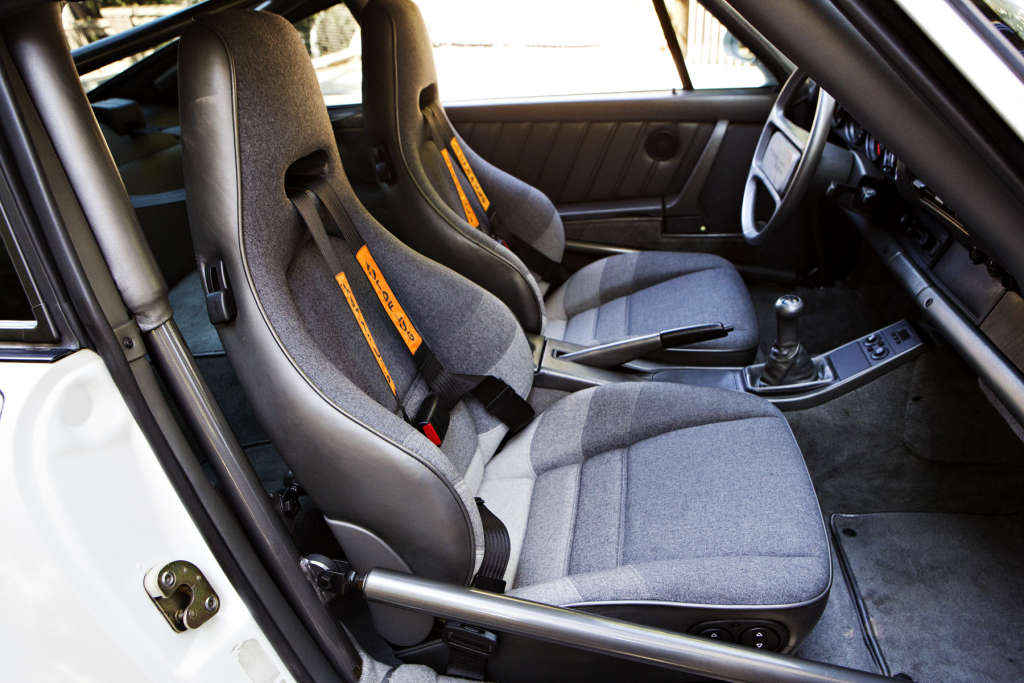
Two variants of the car were available : Komfort and S. The Komfort model, as the name states, offered all of the interior luxuries such as leather seats with electronic adjustment, radio, and air conditioning. Those who opted for the S mode, which stands for Sport, got a car that promoted a raw driving experience. For instance, the interior was rid of its creature comforts, with the radio and AC removed, and the seats being made from cloth rather than leather, with inserts for harnesses. To add to the raw nature of this mode, a leather wrapped roll-cage was added, which meant that the rear seats had to go as well. The advanced suspension system was also taken out, in its place a conventional coilover suspension. All in all, the aforementioned changes make the Sport model 220lbs lighter than the Komfort. Production took place at Baur, a Stuttgart-based coachbuilder, which would make the Kevlar body panels as well as the leather interiors for Komfort examples, while other parts were shipped from their place of manufacture. That being said, Porsche did have its workers inspect the completed cars before they were delivered to customers.
When new, the Komfort was priced at $300,000 USD, with the Sport version’s price unknown, but certainly higher. Due to a miscalculation, Porsche actually lost money on the 959s, as they were selling them for less than what it cost to produce them, which was $720,000 USD. The reasoning behind this was that they entered what they believed was going to be the production cost in the sale contracts, however, once production got underway, it turned out that the cost was much higher than that. Ultimately, 284 production-specification cars were built between 1987 and 1988, of which 29 were Sport models. An additional 6 cars were built in 1992 out of spare parts for a Macau businessman, who paid a substantially higher figure for each of these cars and has remained private when speaking about them, making their whereabouts unknown. Asides from the production cars, some of the prototype vehicles have managed to get into the hands of private owners, though they lack some of the features seen in the final car.
The 959 was seen as a technological marvel back in 1985. Through this car, Porsche set the standard for many automotive trends seen today, particularly with computer-controlled systems and driver adjustments. As one of the first sportscars with all-wheel drive, it helped prove that the drivetrain had a lot of potential in such applications. Its twin turbocharged engine, at the time Porsche’s most advanced, paved the way for the future of the 911, particularly the Turbo model. In fact, the 959 can be said to be the prototype of the modern 911 Turbo, which beginning with the 993 has had technology that was first seen on the 959. When tested by journalists, the car had a top speed of 317km/h, which made it the fastest production car in the world until the RUF CTR came along. Though now outpaced by newer 911 models, the 959 demonstrated that when Porsche’s engineers are granted free reign, they can deliver a car that is well ahead of its time.
In the end, despite the impact that the 959 had on the automotive industry, it was a financial failure for Porsche, which along with the lack of success of other projects, resulted in Mr. Schutz being ousted as CEO of the company. Still, though he did not remain at Porsche to see the 959’s influence on the 911, he will always be accredited as the man who prevented Porsche’s flagship model from walking the plank.
 PorschePassion.net