
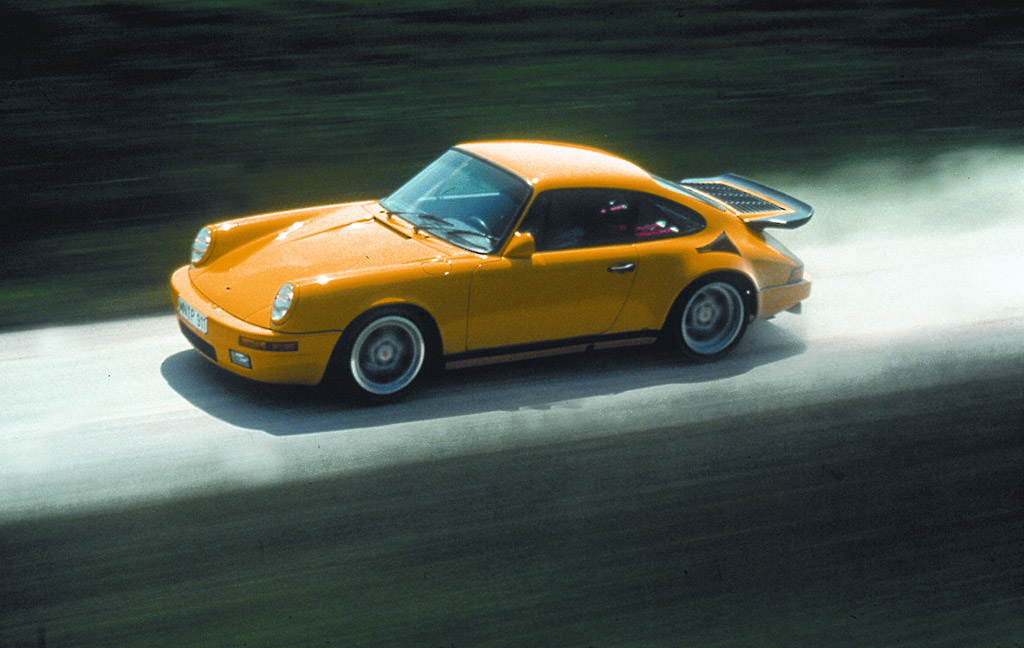
Think of defining eras for the automobile, and you’ll likely think of the 80s and 90s, a period in which European manufacturers were battling it out to see who could build the fastest production cars in the world. Throughout those years, the world got to see cars which are now considered classics today. Porsche, not surprisingly, was part of that battle with their 959 supercar, a car recognized for innovating much of the technologies seen on the 911 Turbo even to this day. Possibly unbeknownst to most, there was another “Porsche” in that supercar battle more than 30 years ago, and it has achieved legendary status within the Porsche community. This car, while derived from the 911, actually came from a little manufacturer known as Ruf.
Ruf Automobile, as it is known, started out as a service shop back in 1939 founded by Alois Ruf Sr., who as a result of his shop’s success, sought out other ventures such as opening up his own gas station and founding a bus company. His son, Alois Jr., turned into a car enthusiast due to his exposure to automobiles thanks to his father’s businesses. As a Porsche devotee, he first began tinkering with the cars at his father’s shop. Once he took over the business following his father’s passing in 1974, Jr. decided to reinvent the company into a shop dedicated to Porsches, eventually leading to the company being recognized as a manufacturer by the German government(they have their own VINs), and the rest is history.
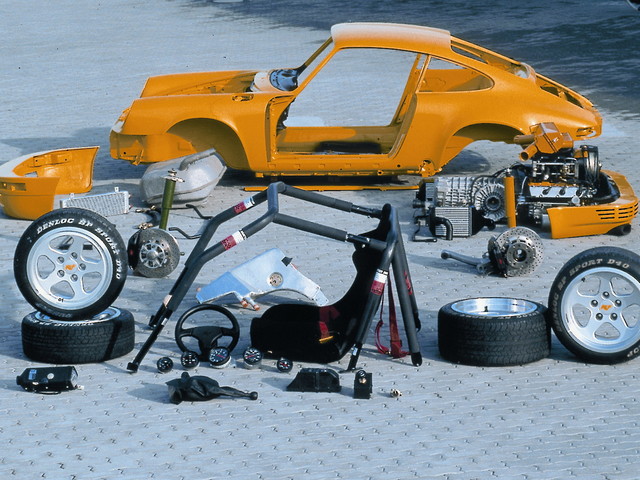
Initially, the reinvented company focused on performing somewhat major modifications to existing Porsche models, such as bumping up horsepower figures and stroking engines to increase their displacement, all to great reception. It was not until 1987, however, that Ruf would establish itself as a world-class manufacturer, with their CTR model. Based on the G-Model 3.2 Carrera, the car was not only a statement from Ruf, but also their vision of the perfect turbocharged 911 possible at the time.
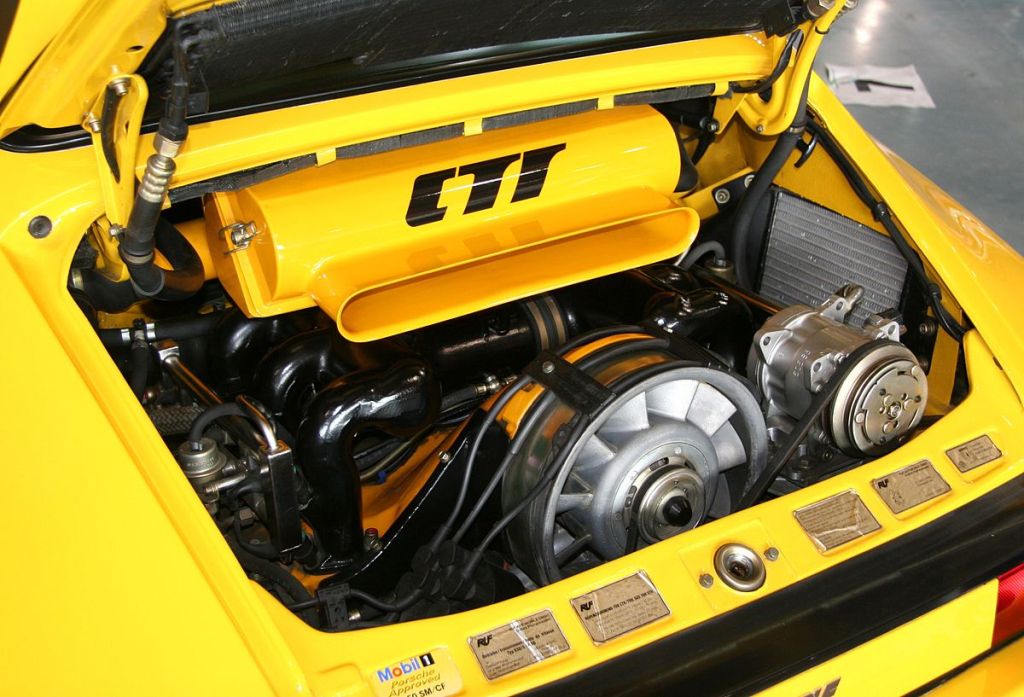
To create the CTR, Ruf started out with a 911 Carrera 3.2 as previously mentioned, chosen over the 930 due to better performance aerodynamically. From there, they took the engine and stroked it to 3.4 litres, added twin-turbochargers and intercoolers, and added the Bosch Motronic 2.1fuel injection system. These engine modifications allowed the CTR to produce a then-unbelievable 469hp and 408 lb-ft of torque, making it more powerful than Porsche’s very own 959 and amongst one of the most powerful cars in the world. To compensate for the power increase, and to ensure good handling, Ruf upgraded the suspension, installed a new Brembo brake system, and swapped the Fuch wheels for new Speedlines wrapped in Dunlop D40 tires, for which the rear arches had to be widened. Not satisfied with Porsche’s 915 and G50 gearboxes, Ruf opted to develop an in-house 5-speed unit that could better cope with the car’s power, which also allowed for the customization of gear ratios.
Work was also done on the exterior to further improve the car’s aerodynamics, with the stock mirrors being replaced with those from the 935 and the rain gutters being removed, which while it would have altered the body’s flex, the addition of a roll cage countered that alteration. New bumpers made of kevlar helped with drag, and a pair of NACA ducts were added at the rear to aid with feeding air to the intercoolers, in. Ruf also aimed to reduce the car’s weight, and so the original Porsche body panels were replaced with ones made from aluminum, reducing weight by 200 kilos.
In total, Ruf produced 29 CTRs from scratch, each priced at $223,000USD, and 20-30 care were made as conversions from Carrera 3.2 cars belonging to customers.
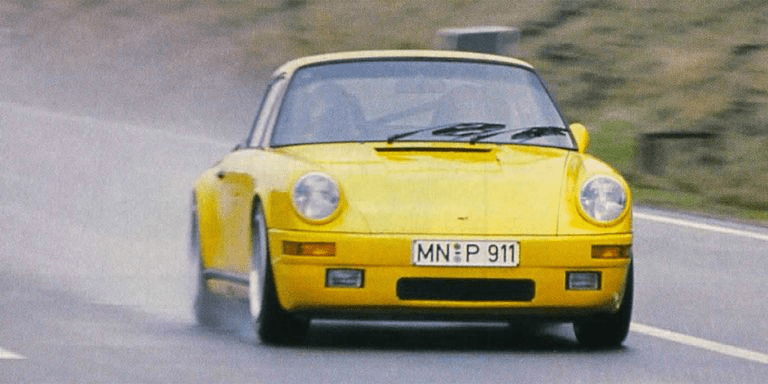
The CTR gained its attention when Road & Track magazine tested it in “World’s Fastest Cars” contest for its July 1987 issue. They took this car, and its competitors(which included the Komfort and Sport variant of the 959), to Volkswagen’s own Ehra-Lessien test track, which remains open to this day. Here, they performed top-speed runs of all of the cars being tested, with Phill Hill and Paul Frere behind the wheel of all of the cars. To add to the moment, Alois Ruf Jr. himself was present at the track.
“This is fastest than I’ve ever gone in my life!”
Paul Frere after achieving 209mph in the CTR
At the end of the day, Frere managed to do 211mph on the banked test track, 13 and 14mph faster than the 959 Sport and Komfort respectively. The CTR had the biggest top speed out of all cars, and with that it gained the title of “The Fastest Production Car In The World”, which it held until 1993.
Perhaps one of the most famous featurettes that involve the CTR is the official Nürburgring onboard video produced by Ruf themselves. In this video, Stefan Roser takes the car for a drive around the Nordschleife at full throttle, but not without having to fight the car by constantly correcting it via steering inputs. The onboard perfectly demonstrates the car’s behaviour when driven hard on a track, in which its got an insane tendency to oversteer, but in a fun way though, as Stefan manages to turn some of that oversteer into some power sliding action around the corners. That aside, you can see all 469 ponies being put to good use, as the car is definitely shown to be fast. Below is the video from Ruf’s official YouTube channel:
Given that the CTR was made all the way back in 1987, the younger generation of Porsche enthusiasts likely did not come to learn about the car through press articles or the famous onboard, but rather, through a video game. One of the CTR’s most famous appearances was in the Gran Turismo series of video games. I personally came to learn about the car through these games(Gran Turismo 4 to be exact), and it was one of my favourite cars in the game. At the time, Polyphony Digital(Gran Turismo’s developer) was unable to include actual Porsches in their games due to Electronic Arts(developers of Need For Speed) having an exclusivity license with Porsche, so Polyphony had to make to with Ruf vehicles. Eventually, Polyphony would include Porsche vehicles in their games beginning with Gran Turismo Sport in 2017.

Today, the CTR continues to be recognized amongst Porsche fanatics as one of the best 911s ever created, despite not being created by Porsche themselves. It is a car that was state-of-the art back in its day, showcasing technologies that Porsche would not make mainstream on its models until many years later. Its then-impressive 469hp was a number that Porsche would not surpass with the 911 until 2001, with the 996 GT2. The success and popularity of the car prompted Ruf to create a tribute model. This new model is fitted with more modern technologies unlike the 1987 model, such as a water-cooled engine, carbon fibre body, centerlock wheels, and a 6-speed gearbox. While it is a superior car in all aspects, there is no forgetting about the famous origins of this car.
Best Regards,
Juan Reyes-Abreu
 PorschePassion.net