
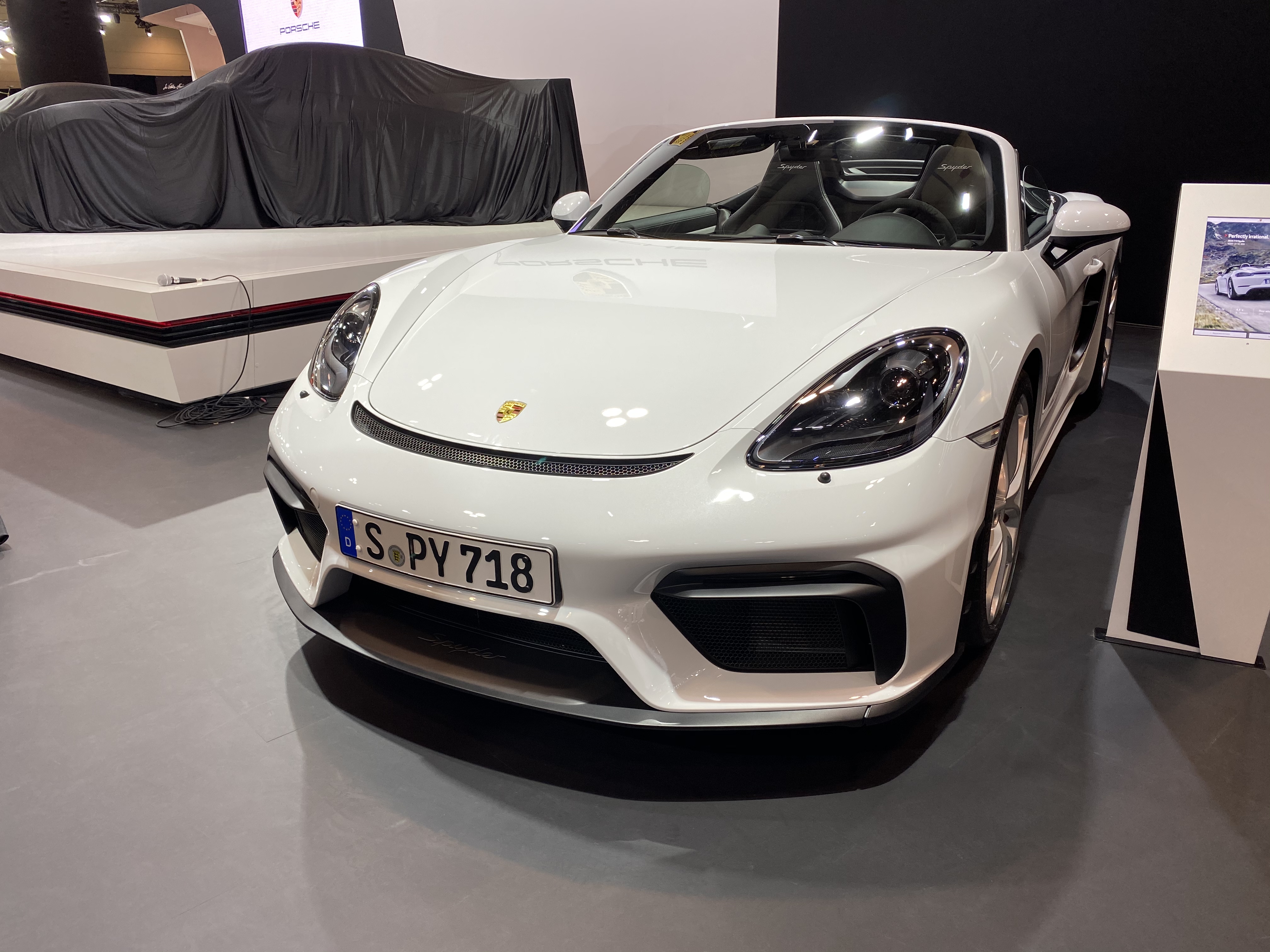
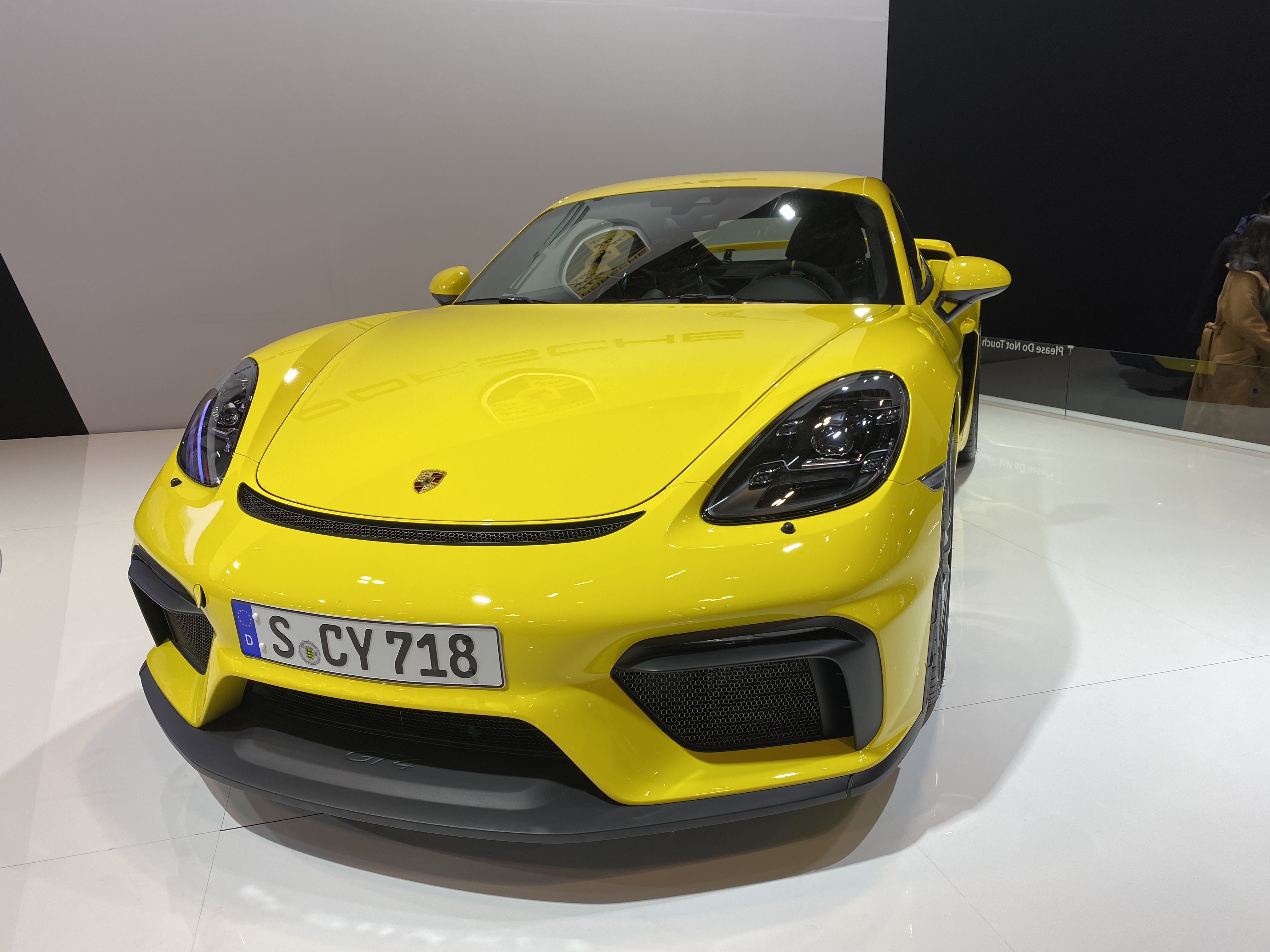
Automotive press in Toronto got their first look at Porsche’s latest offering of driver-engaging models, the 718 GT4 and Spyder, introduced last June. Having been invited to the Canadian International Autoshow’s Media Day, I was able to finally get an in-depth look at these cars in person. I was very excited to finally see these models, as they are Porsche’s first steps towards correcting the 718 model.
To give some brief background information, the 718 Boxster and Cayman were introduced in early 2016 as the successors to the 981-generation Boxster and Cayman models. To a certain degree of criticism, Porsche opted to equip the new models with a newly-developed turbocharged flat-4 engine, which while as powerful as the outgoing flat-6s, it was not the same experience. That aside, the 718 excelled in the handling department, as well as in the styling department, and I strongly believe that it is the best-looking generation out of all the Boxster and Cayman models to date.
Now, being that this was at an autoshow, I was only able to get a look at the car inside and out, so this is only going to be an cosmetic impression per say. I also must add that I was unable to get as up close to the GT4 as I was the Spyder, so I am unable to comment on it much.
Overview
The 718 GT4 and Spyder models are the track-focused and pure open-driving variants of the 718 models respectively. Both models are powered by the same naturally-aspirated 4.0L flat-6 engine which has a power output of 414hp and 420 Nm of torque. Do note that this engine is not derived from the 4.0L engine seen on the latest GT-model 911s, but rather, the turbocharged units seen in the 911 Carrera models from 2016 onward. Power is transferred to the wheels via a 6-speed manual transmission with a dual-mass flywheel, though it is rumoured that PDK will become an option soon. To help with handling, both PASM(Porsche Active Suspension Management) and PTV(Porsche Torque Vectoring) come as standard. With PASM, the suspension is always being adjusted depending on road/track conditions and how the car is being driven, and it is possible to select between two suspension modes at the push of a button: “Normal” and “Sport”, which are meant for street and track use respectively. Being equipped with PASM also means that the cars sit lower than the standard 718 models, with the cars being 30mm lower than the latter. Porsche Torque Vectoring is optimal in maximizing turning performance via adjustment of power transferred to the rear wheels, be it at the track or the open roads. Per usual, several add-ons are offered should owner find themselves wanting a bit more out of these cars, such as the PCCBs, Chrono Package with Porsche Track App, among others.
The Exterior
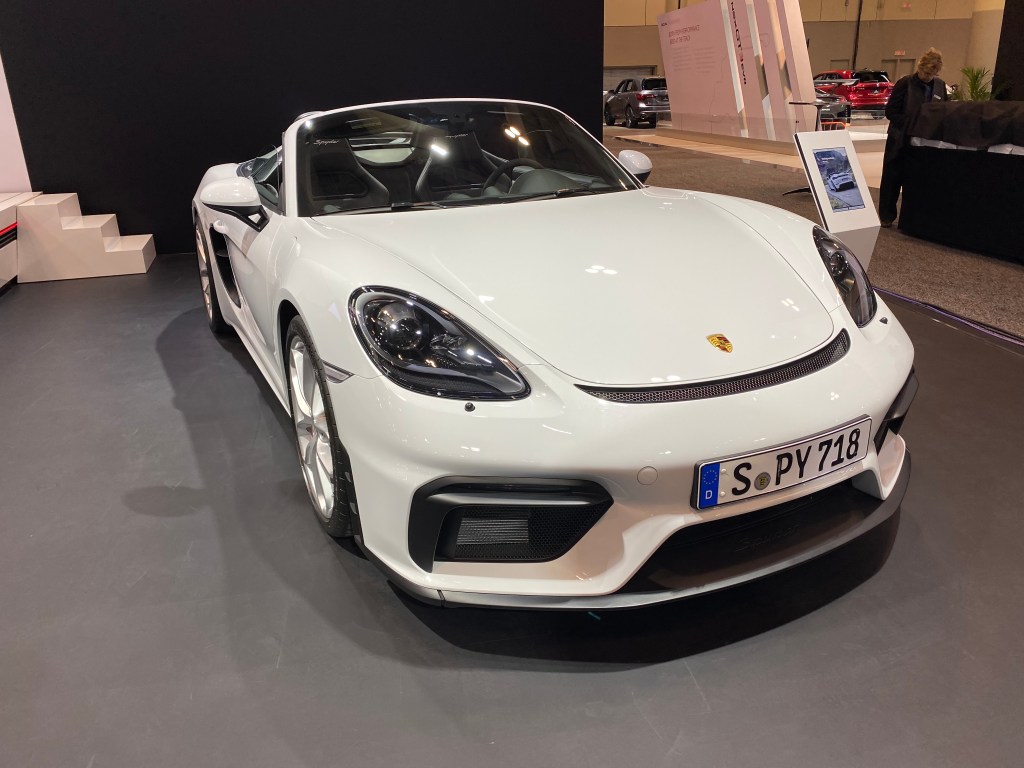
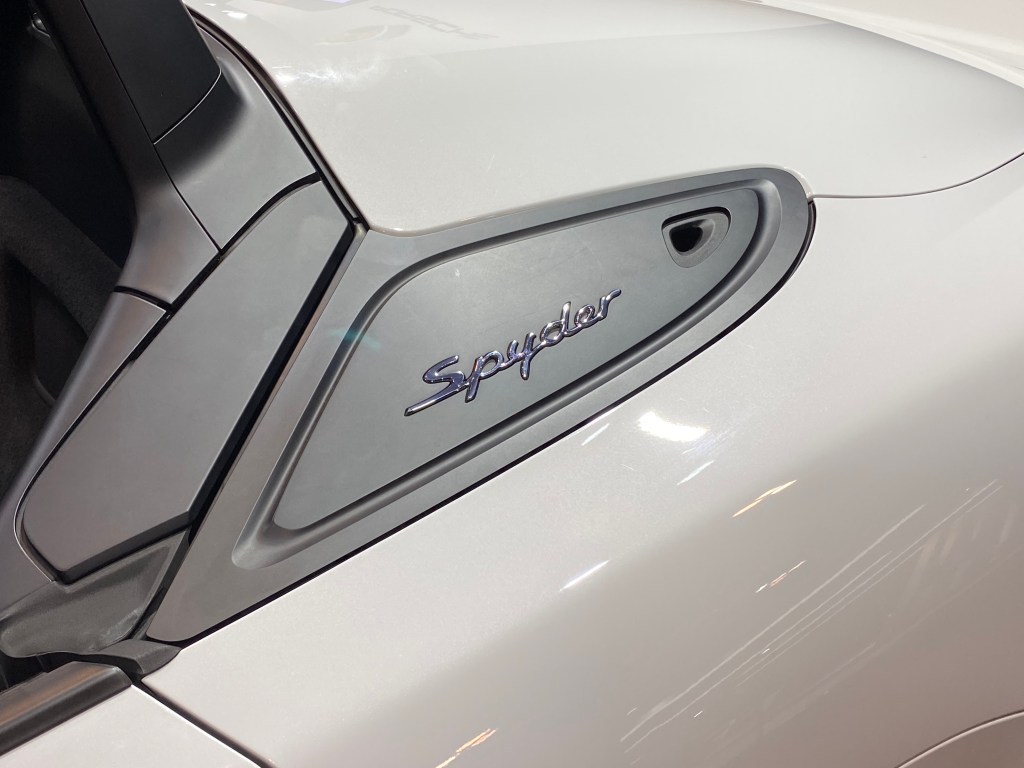
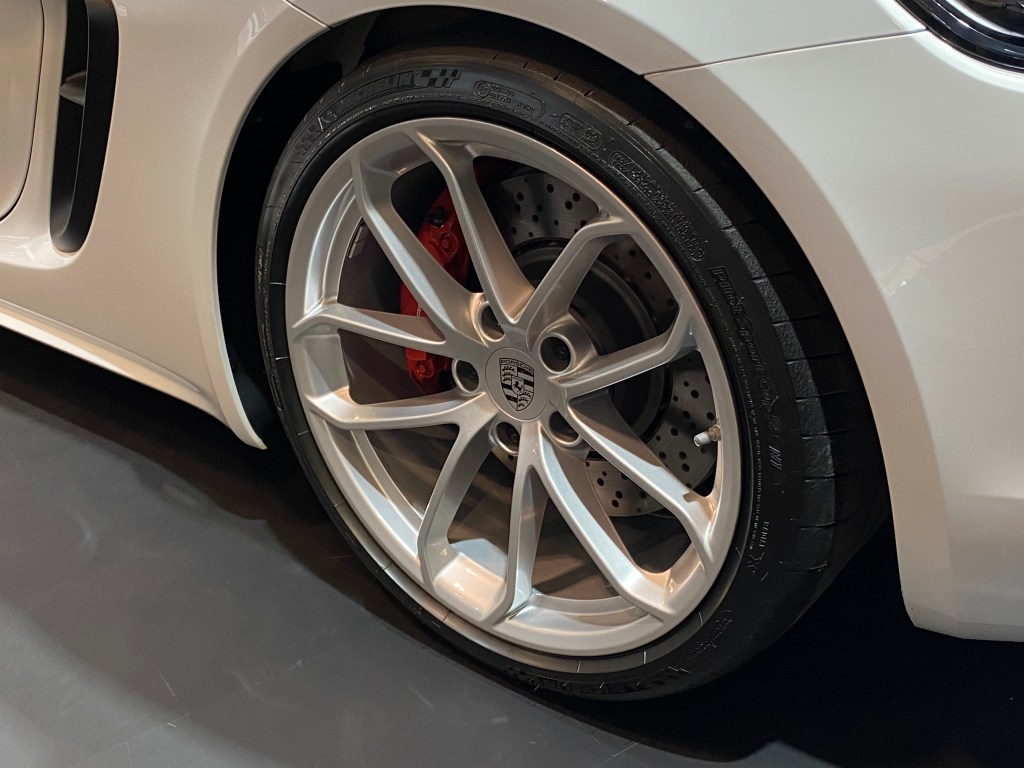
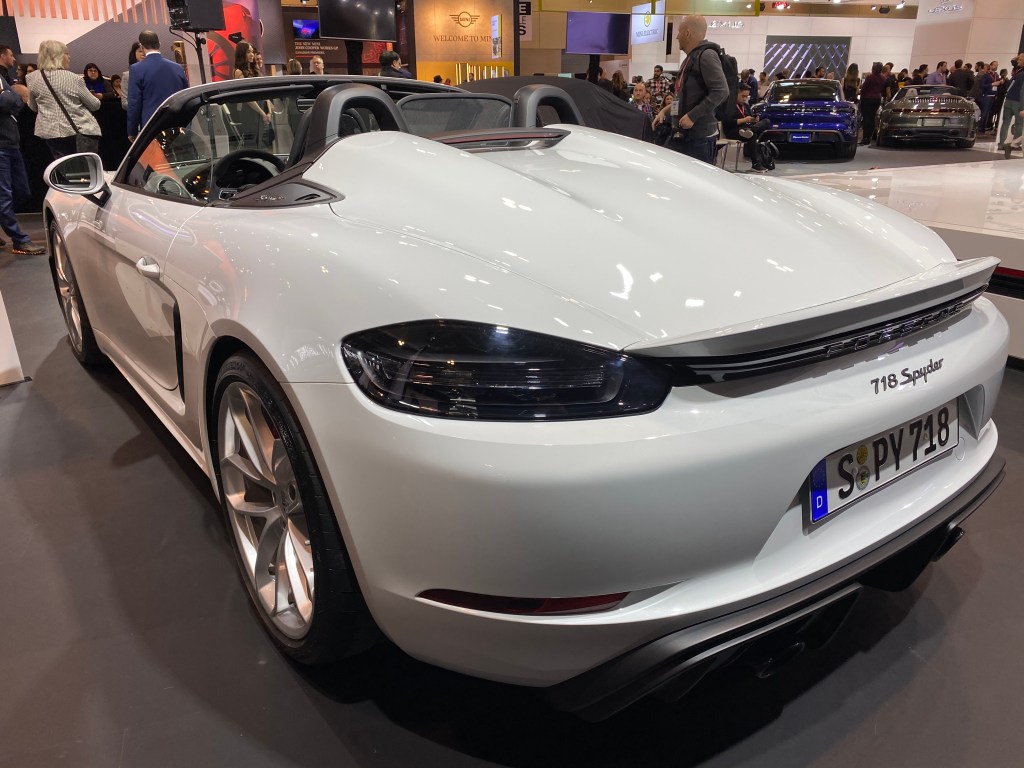
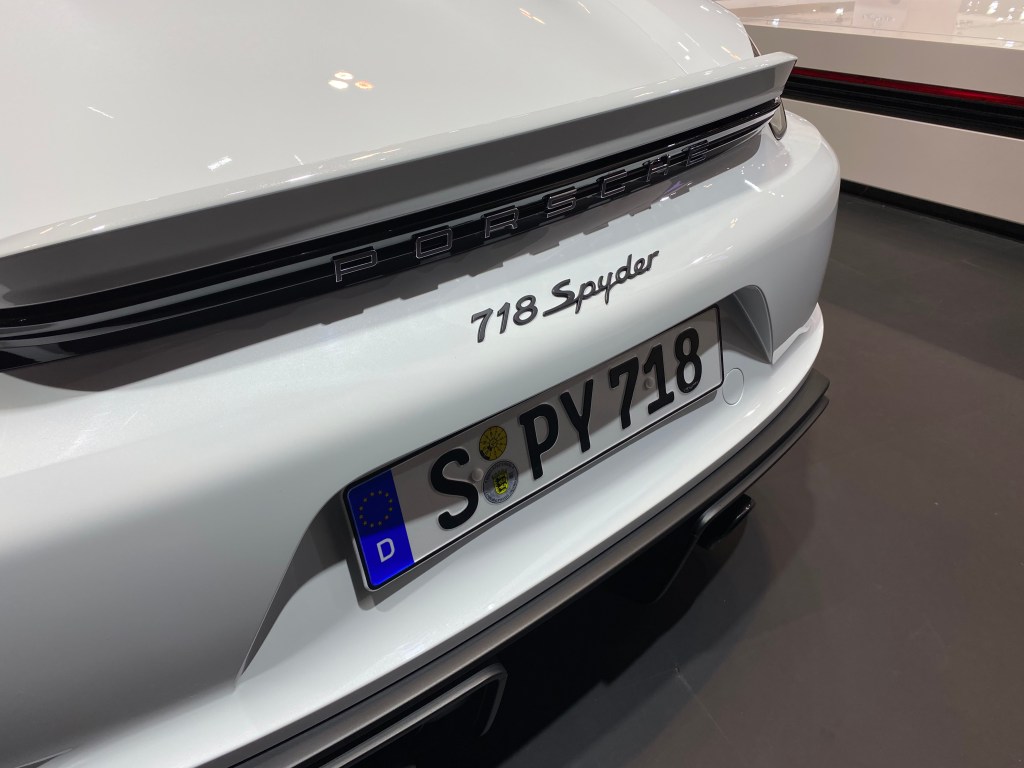
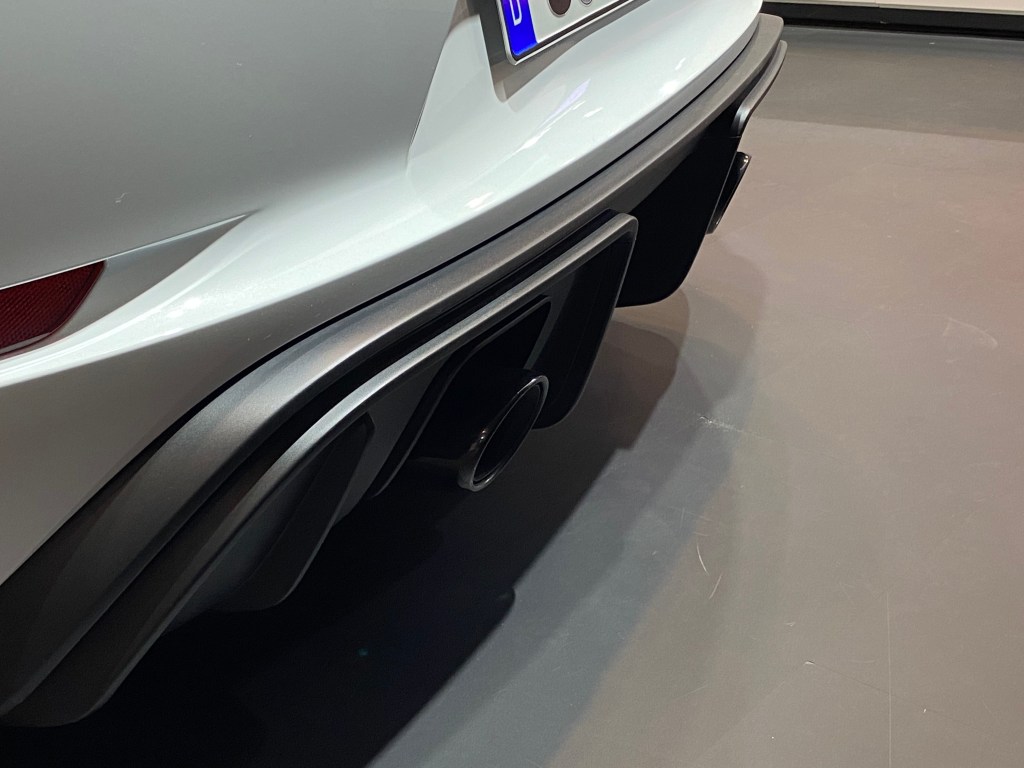
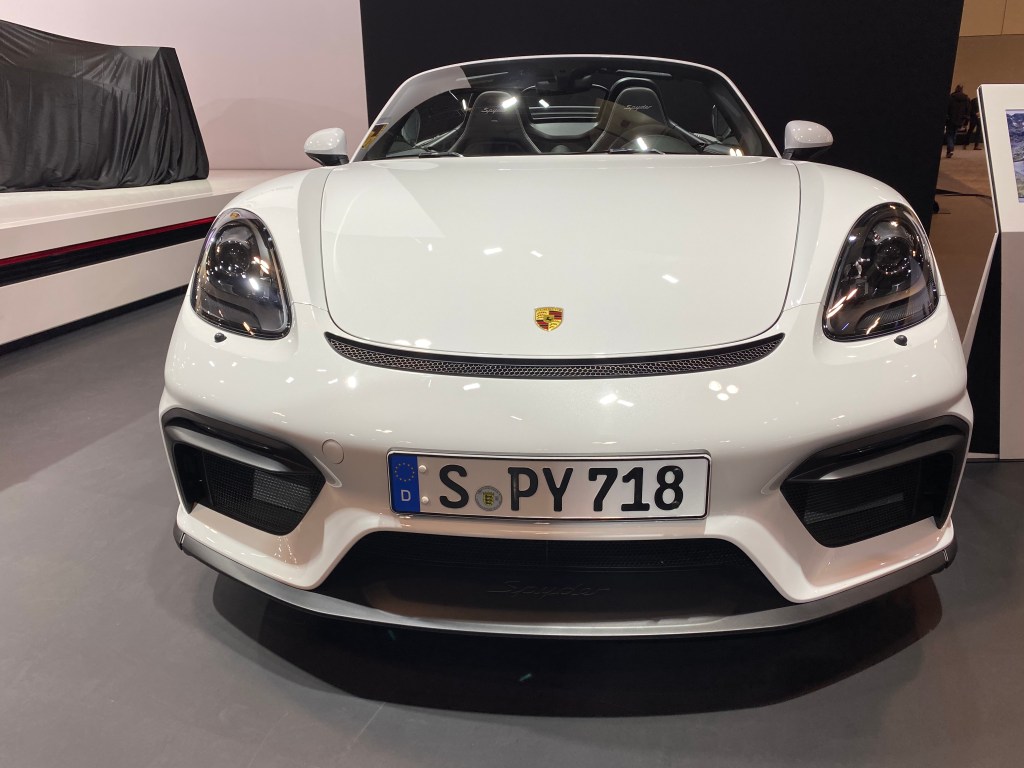
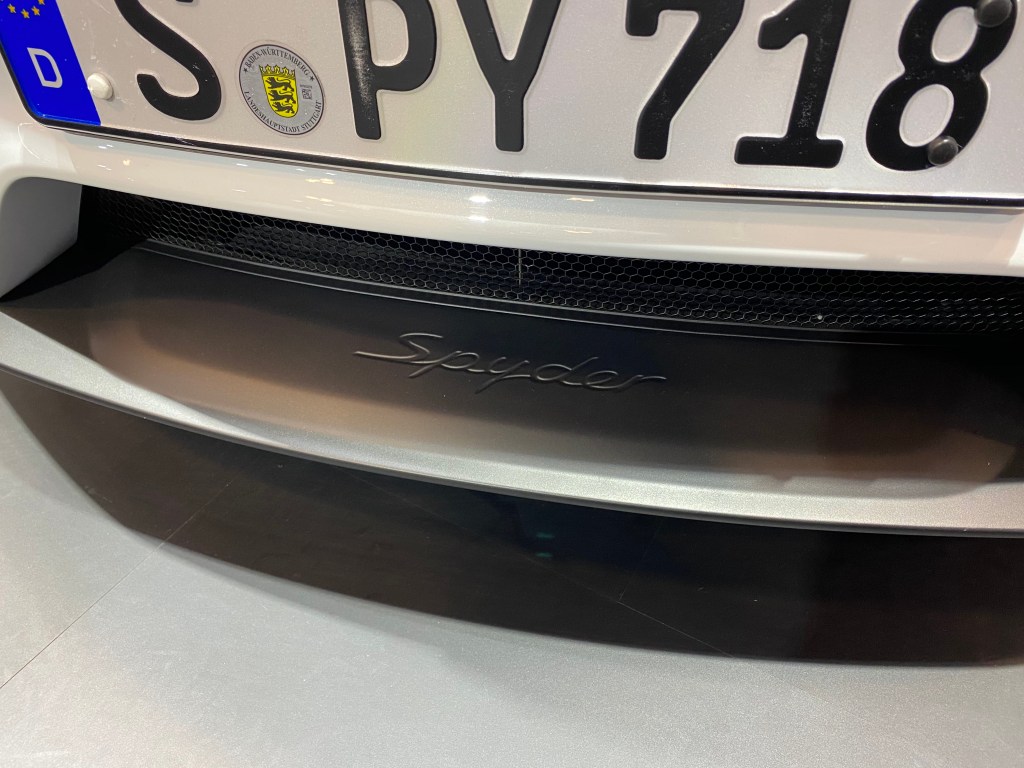
I’ll start with the Spyder first. Upon seeing the car, you immediately notice the more aggressive exterior design that takes cues from recent cars made by the GT division such as the 911 GT3, informing you that this is no ordinary Boxster. Also seen are the new 20-inch 718 wheels made for the Spyder and GT4, but can be ordered for other cars as well. Heading towards the back and you will see that signature “bump” in the rear of the car which goes from the midsection of the car all the way to the back. You can essentially say that the Spyder is a “baby Speedster”, given their similar shapes. More aggressive bodywork is present in the rear, particularly the rear diffuser which generates much of the downforce. I always thought that the 718 was one of Porsche’s best designs in recent times, and compared to its predecessor the 981, it brought back that small, yet muscular look that was seen in the 987-generation Boxster and Cayman. If you put a 987 Boxster and a 718 Boxster beside each other, you will notice that the 718’s design is a modernized variant of the 987’s design. The same can be said of the 987 Boxster Spyder compared to the new car.
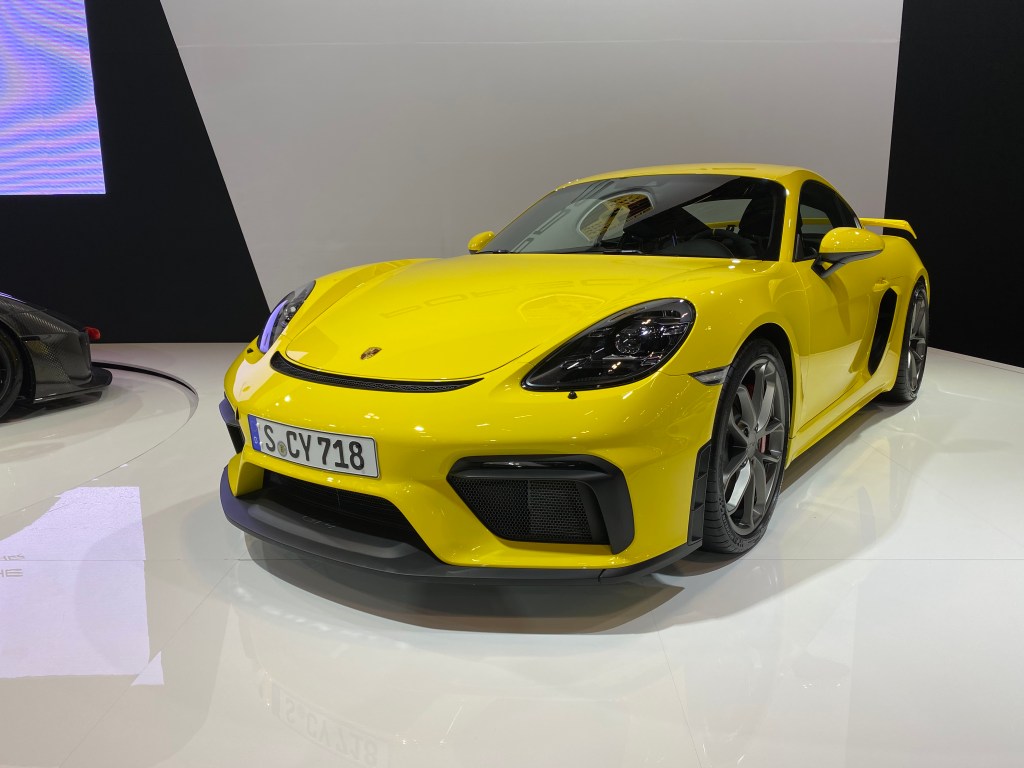
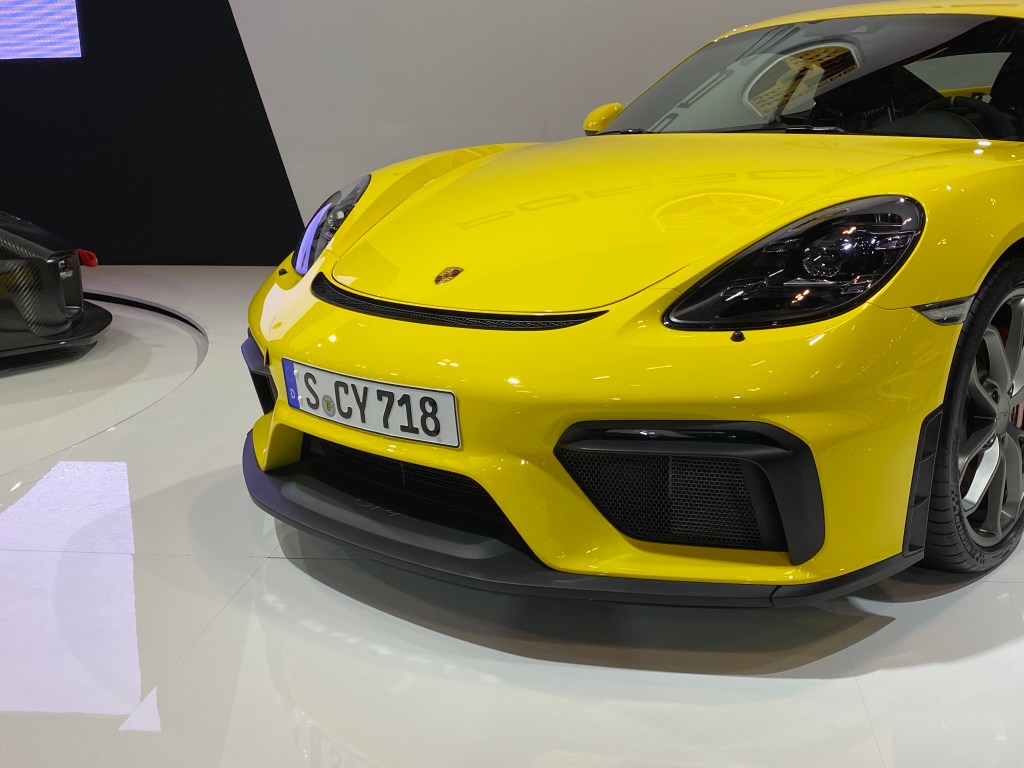
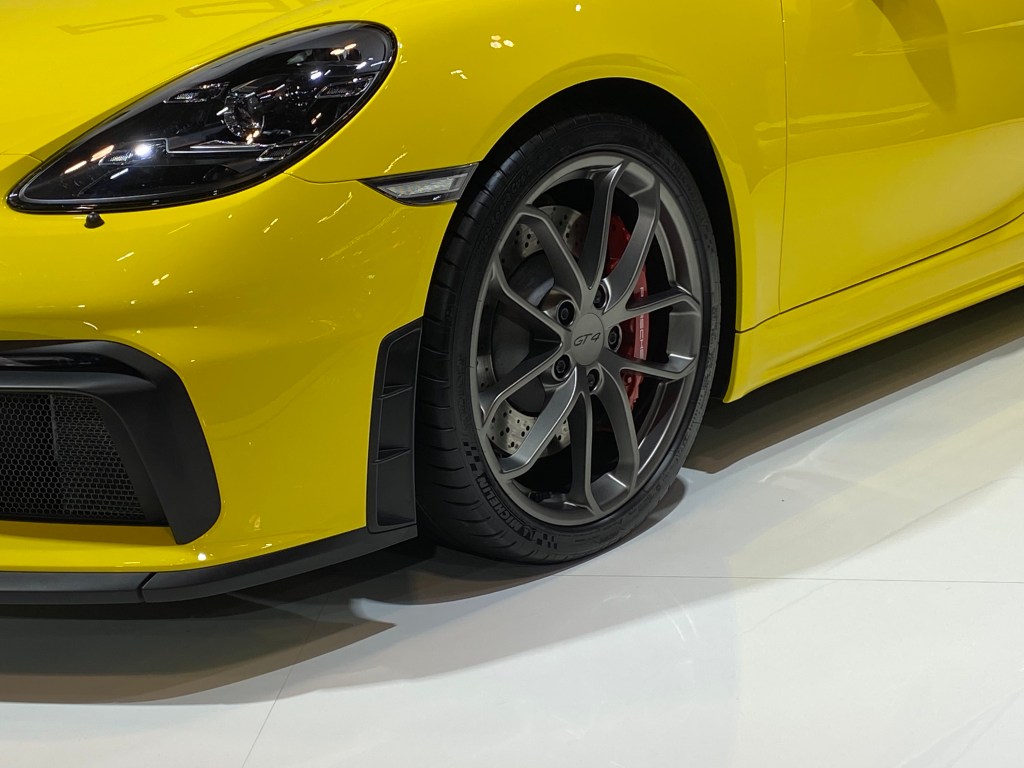
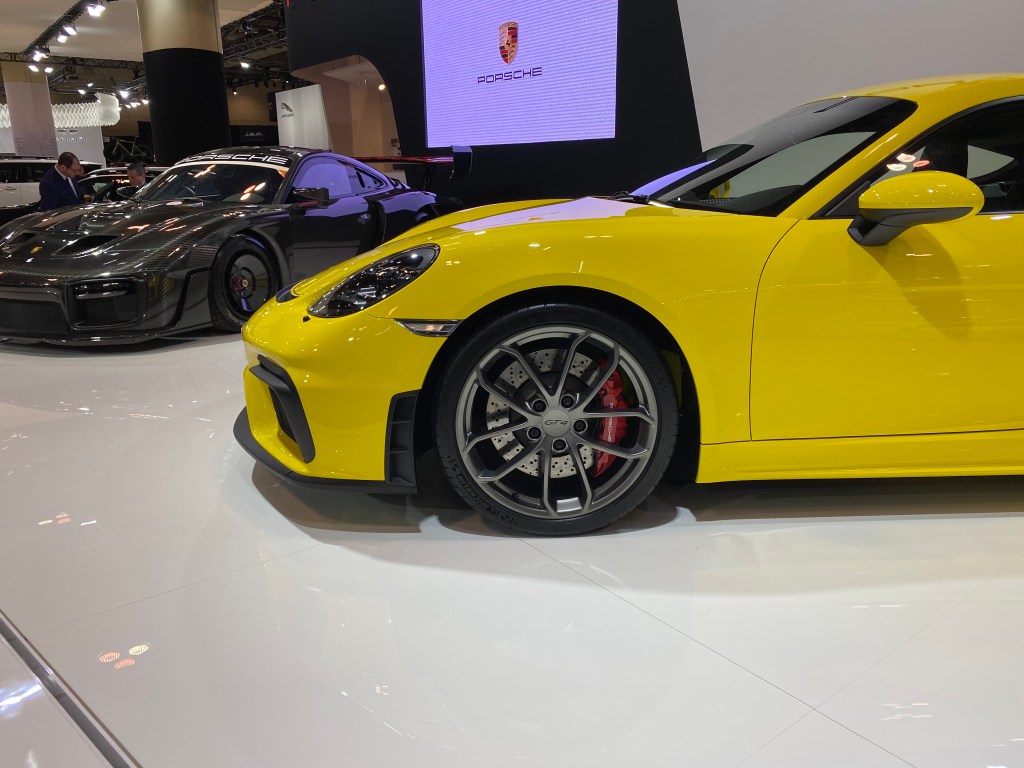
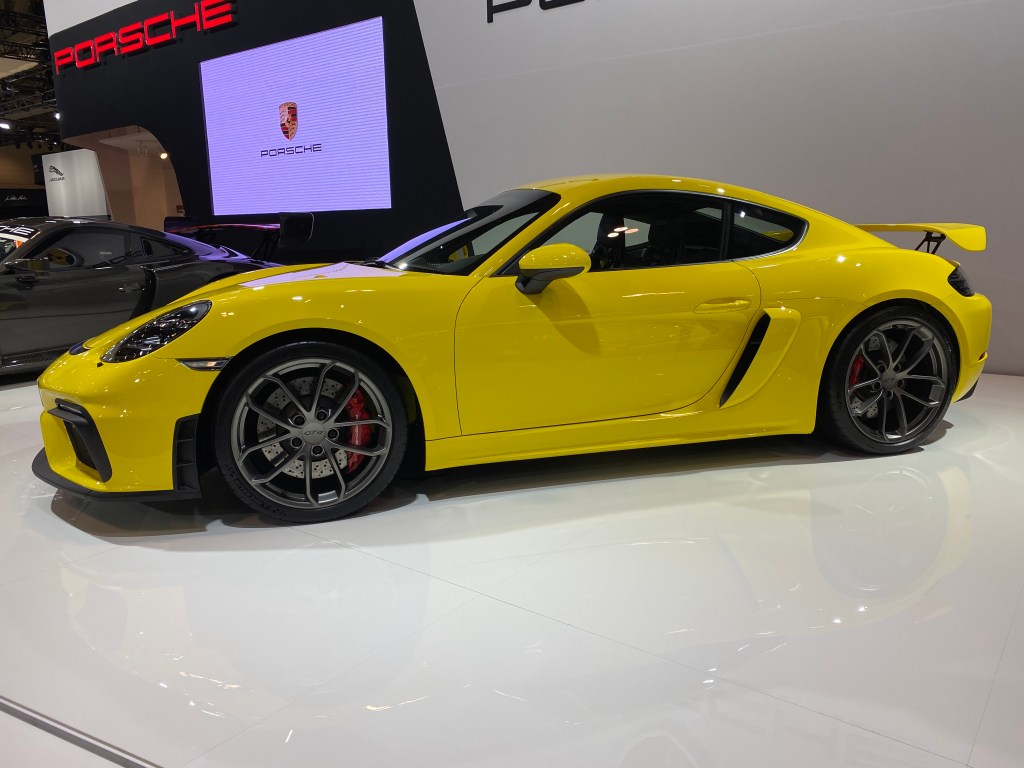
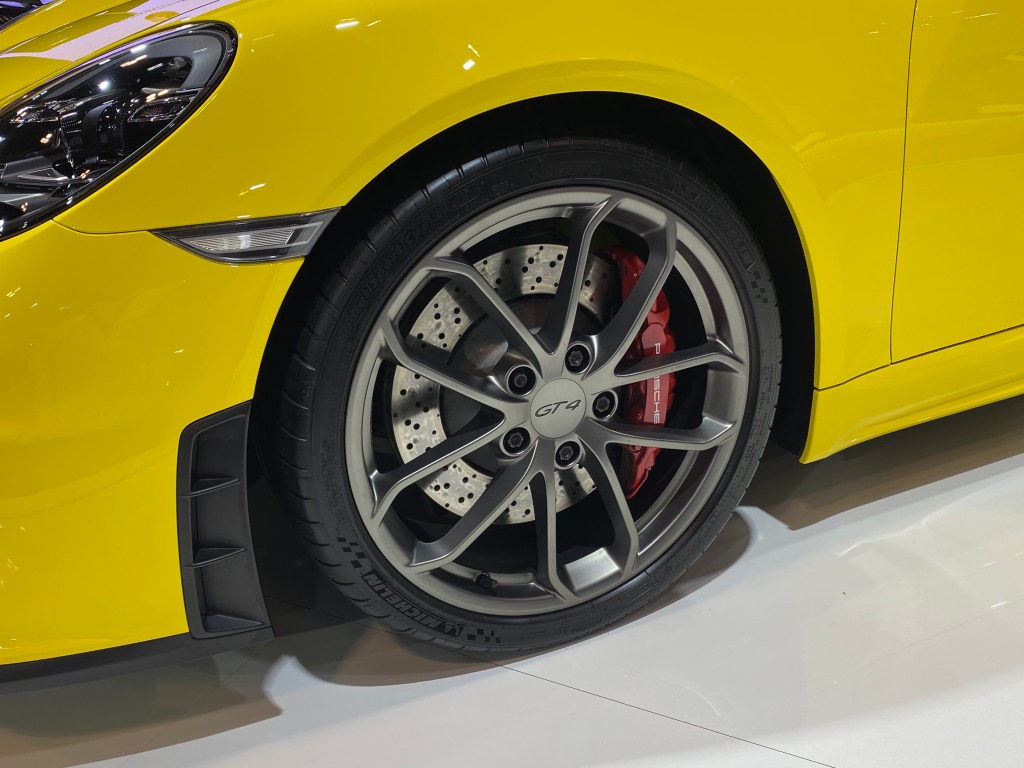
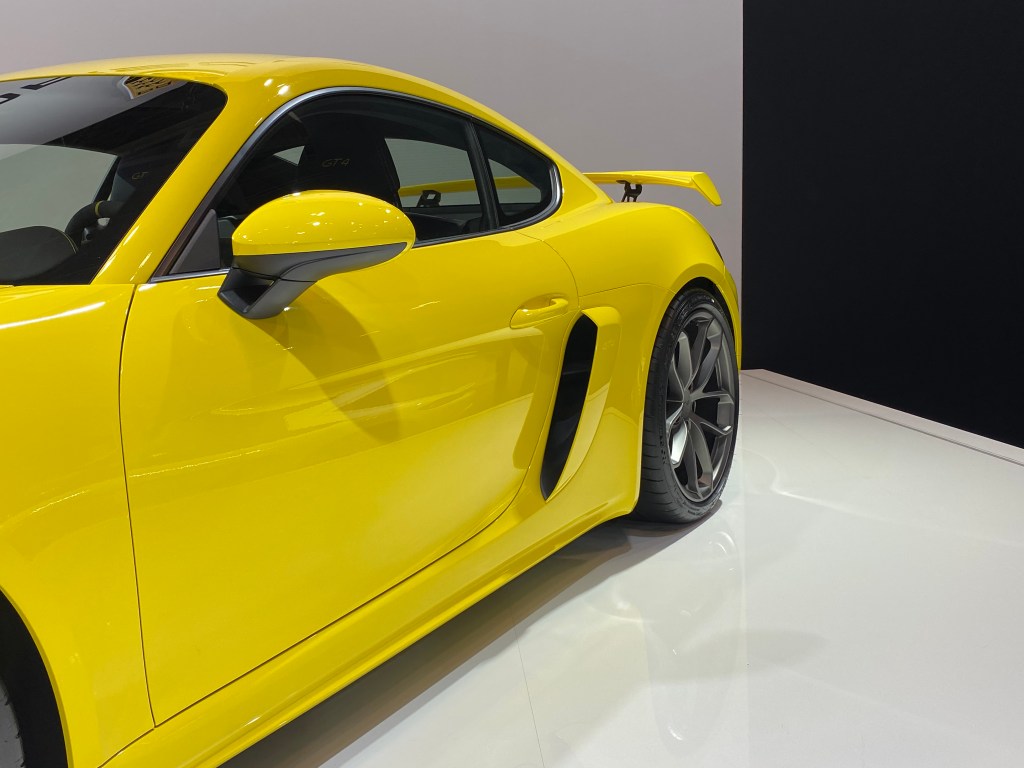
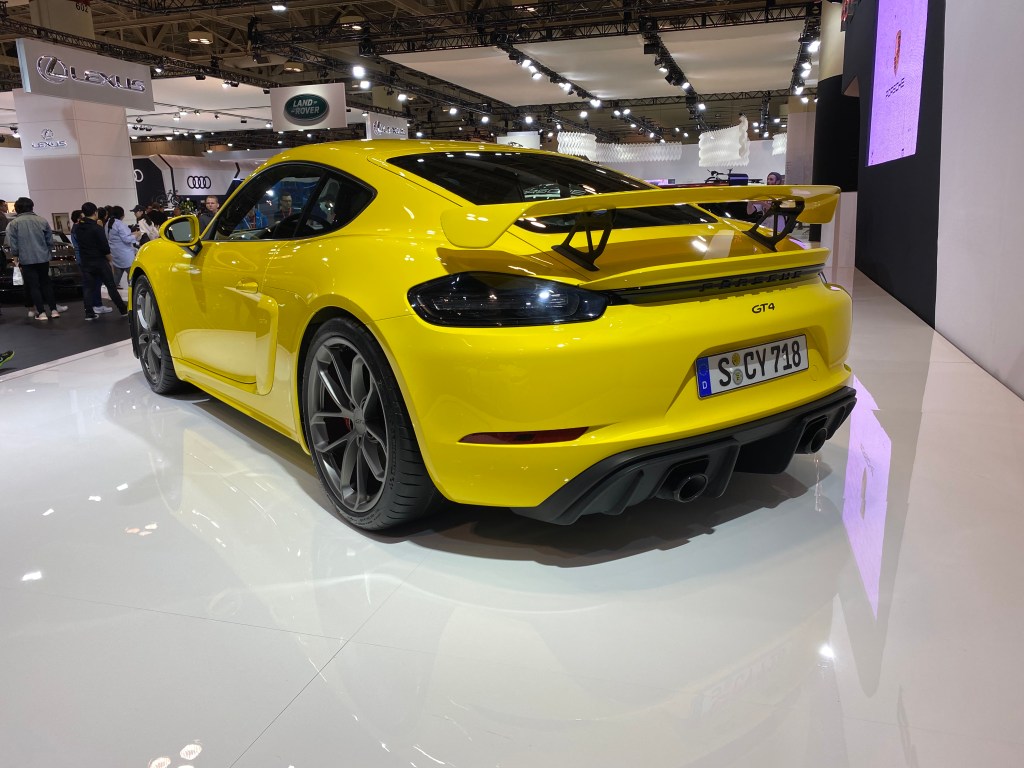
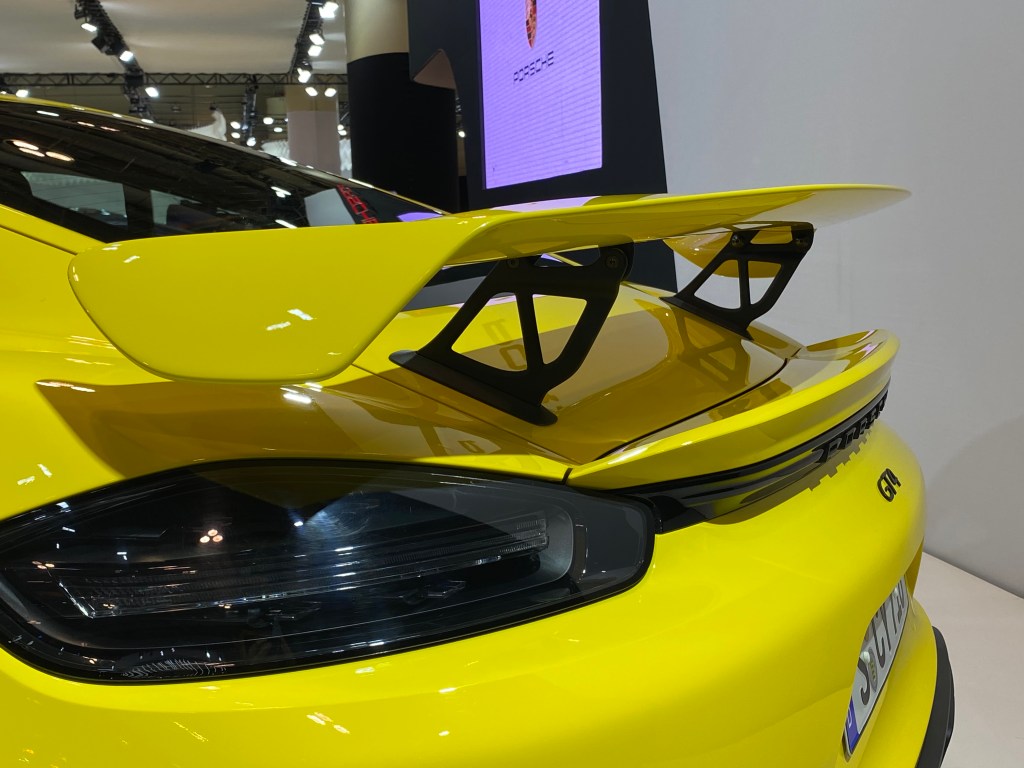
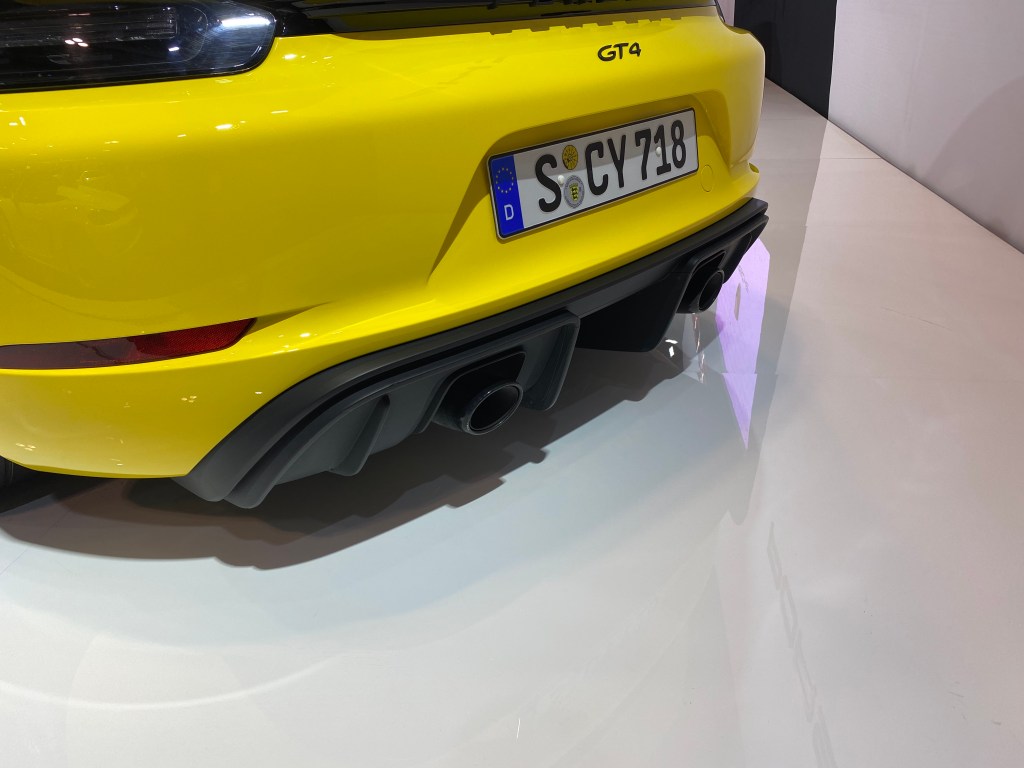
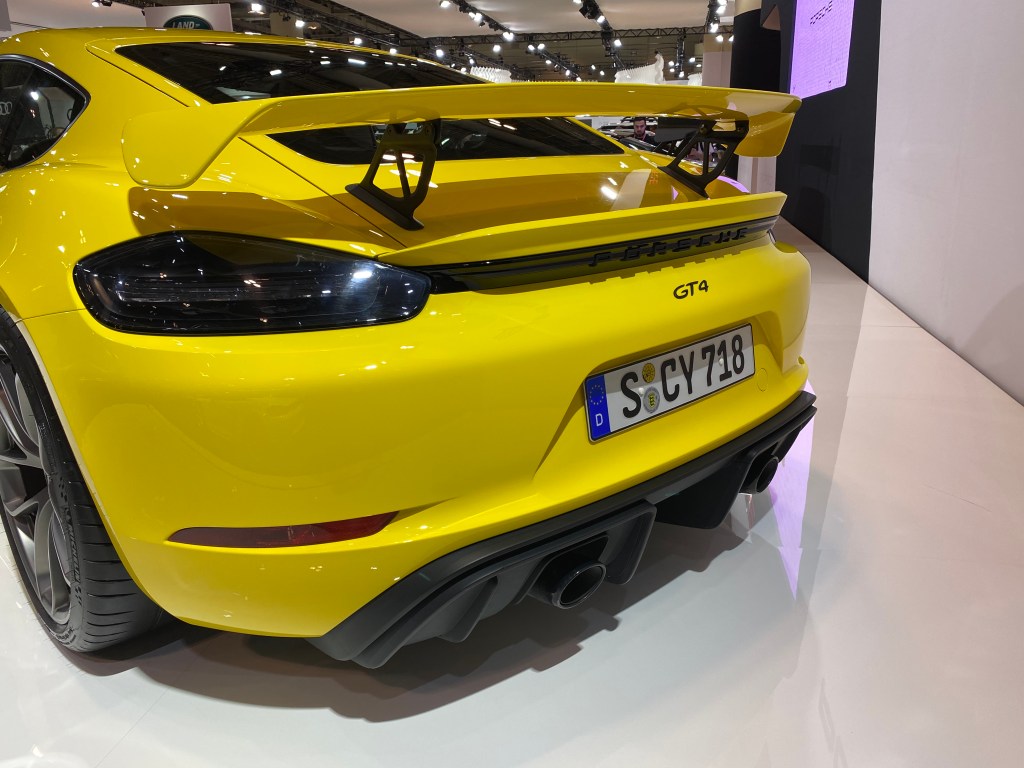
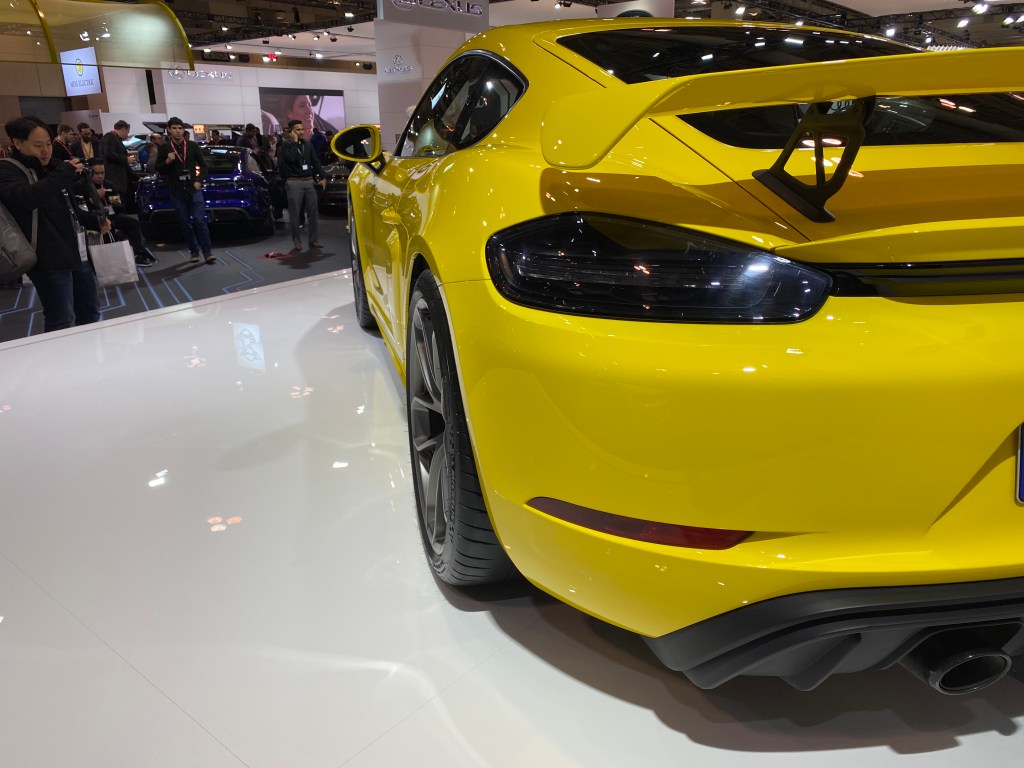
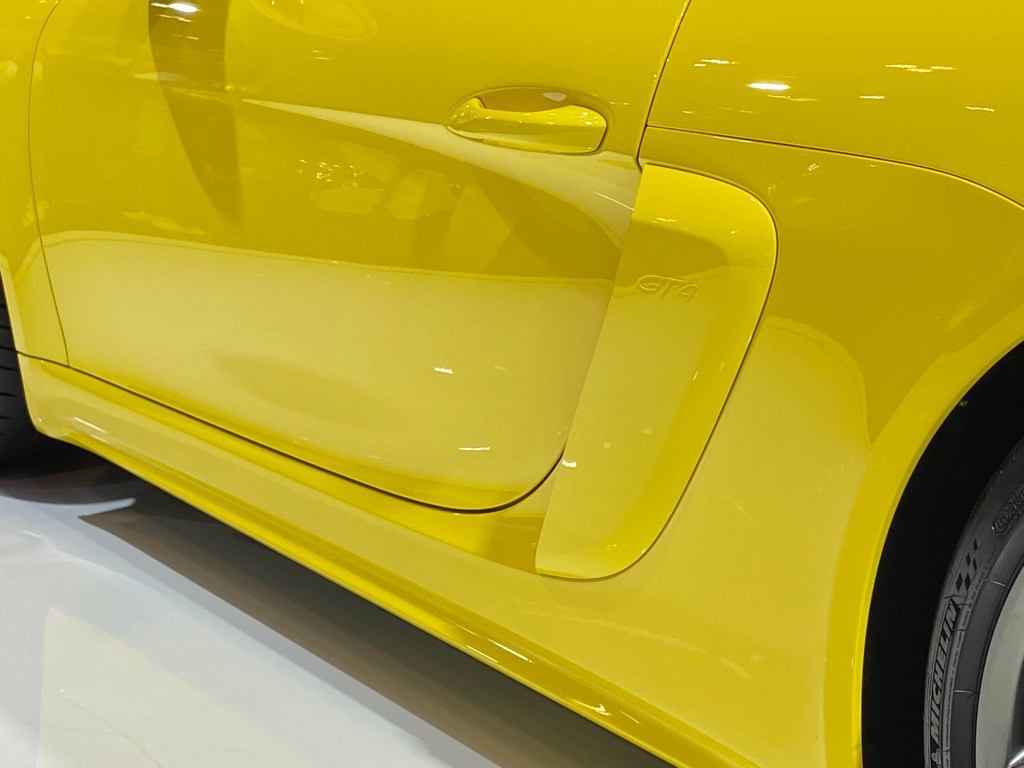
Moving on to the GT4, its similarities in bodywork compared to its twin-brother the Spyder are very evident, minus the fact that the GT4 is a coupe, of course. Since the Spyder resembles the 911 Speedster, then that must mean that the Cayman GT4 must resemble the 911 GT3, right? And that is exactly as this car is seen, a baby, not budget, GT3. The GT4 I find is the car that takes the most advantage of the 718’s design, as it takes the already-beautiful lines of the standard car and gives them the “GT touch”. The end result is a car that is both menacing and better looking than its predecessor, the 981 GT4. Because it’s meant to resemble a GT3, then it must have a rear wing, and just like the car before it, it does have one indeed. This wing , like the rear diffuser in both cars, generates downforce. That being said, it is without question that the GT4 would drive better on the track than the Spyder, as you got 2 sources of downforce versus 1 in the Spyder. Asides from those differences, the GT4 is no different than the Spyder.
The Interior

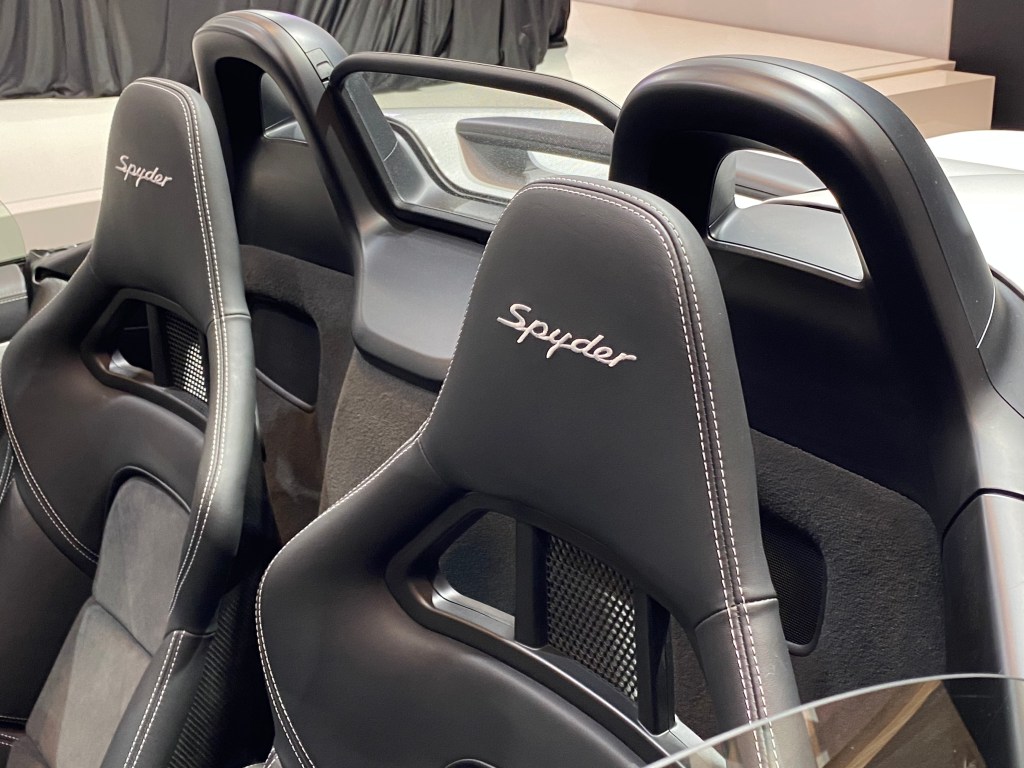
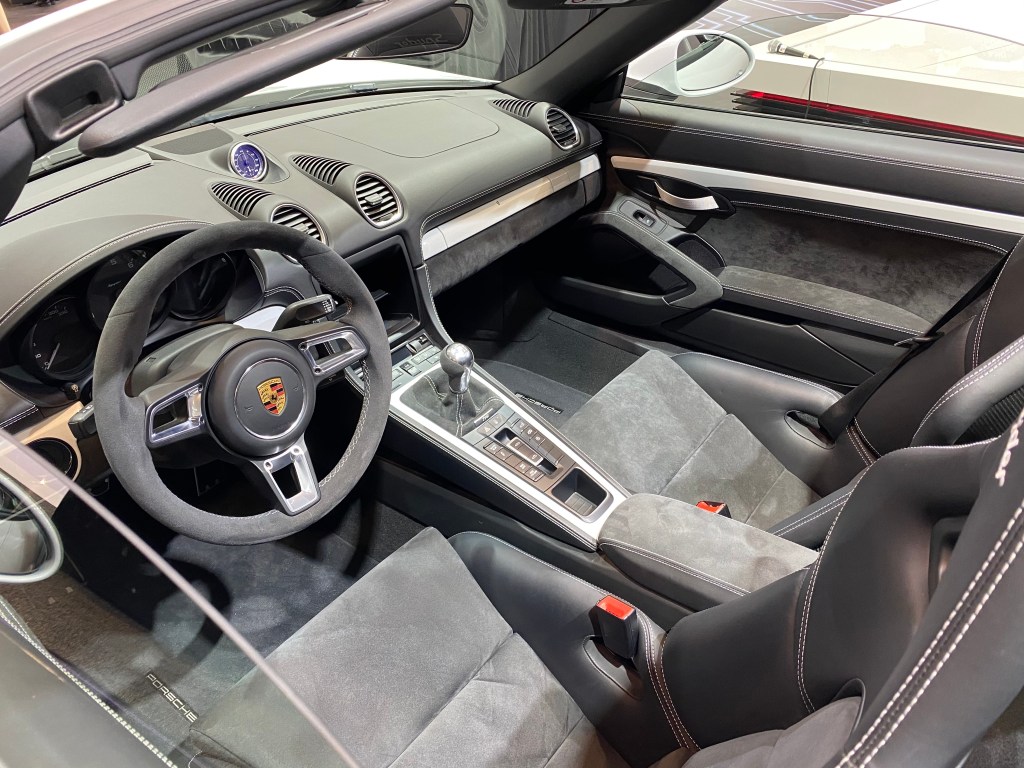
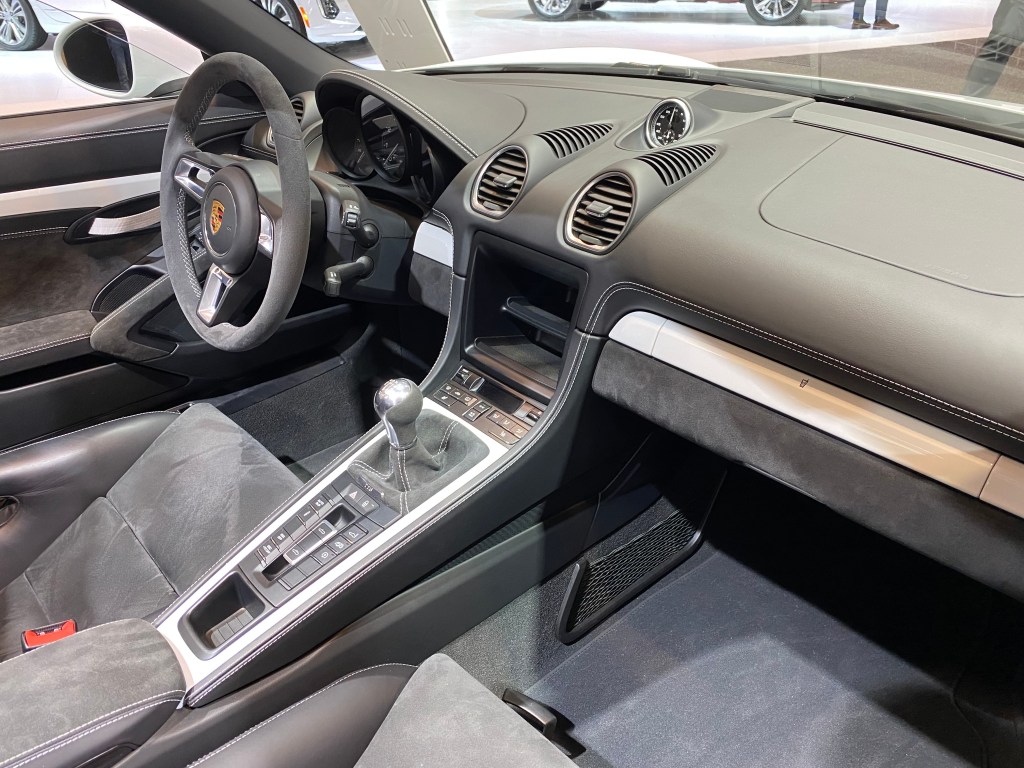
Something to note before I begin: The particular Boxster Spyder and Cayman GT4 that were on display at the autoshow were Euro-spec cars, meaning that they have options which will not be available here. Because I was unable to get up-close to the GT4, I was subsequently unable to see its interior, so I am only going to speak on the Spyder’s interior, but they are similar, if not the same.
The interior in both cars are carried over from the standard 718 models, but with lots of alcantara touches, including the steering wheel, seat inserts, and door cards. It also has the pull strap seen in the GT cars for weight saving reasons. It is possible to have certain components in leather should an owner wish so. Seen in this particular car are the GT2 seats and radio delete, two of the options that will not be available here in North America. I must say, those seats really suit the car, more so than the Lightweight Bucket Seats which we get here. If only Porsche could find a way to modify them to comply with North American standards. As for radio delete, I can understand that both the US and Canadian governments would like owners of new cars to have backup cameras, and while I do like to listen to music every once in a while, among having other features you typically see in an infotainment system, I wouldn’t get this option.
Conclusion
It is without question that the 718 GT4 and Spyder are the most in-demand Porsche models at the moment. Their aggressive and sporty styling, combined with their purist-oriented handling characteristics as well as being manual only, makes for a car that could meet just about any driver’s needs, be it at the track or during spirited driving around public roads. These models demonstrate that you don’t need to spend 911 GT3 or Turbo money in order to get the ultimate in Porsche performance. That being said, a buyer would be left with a decision, which would be either one of these two cars or a base 992 Carrera. With the 992 being more of a luxury sportscar, it may not appeal purist Porsche buyers, myself included, so I would much rather have these new 718s. This is a step in the right direction from Porsche on their way to finally correct what made the 718 not as appealing to loyal customers of the brand.
If you are interesting in knowing more information and potentially attending the Canadian International Autoshow, running from February 14th to the 23rd, you can follow this link.
On an afternote, you can look forward to my first look at the new Taycan, which was also present at the show.
Best Regards,
Juan Reyes-Abreu
 PorschePassion.net
Great review from a Porsche connoisseur.
Took a look this weekend to the Porsche models and as expected, this brand always delivers great speed machines.
LikeLike
Indeed. I just wish that they made the 911 a little bit more purist oriented, and less luxurious.
LikeLike